
The Story Behind the Shot: Freezing Fast Motion in Time

Back when I actually had free time I would play around with all sorts of photographic principles. One thing I was always intrigued by was freezing very fast motion in time. Even very expensive cameras can only operate their shutter at 1/8000 of a second. For most things this is incredibly fast, for my purposes it wasn’t even close. The image above was created at 1/20000 sec. To do this I actually had to take the picture in a totally dark room. I filled a water balloon and strung it up over the sink in my laundry room. I set up the camera, and connected the flash with a standard sync cable (a common cable in flash photography). Inside the cable are two separate wires, if you touch these wires together the flash will fire. I arranged my whole scenario and set the flash and camera to the proper manual exposure. I made a loop with one side of the wire and connected it to the balloon. By putting the other side of the wire through the loop it will fire the flash when the balloon moves causing the wires to touch. After lining up with a dart I had a friend turn off the light. I opening the shutter on the camera I tossed the dart (luckily hitting the balloon) causing the whole chain reaction to take place. The resulting image captures a moment in time before the water looses its balloon form.
The Story Behind the Shot: Yellow BMW at Night
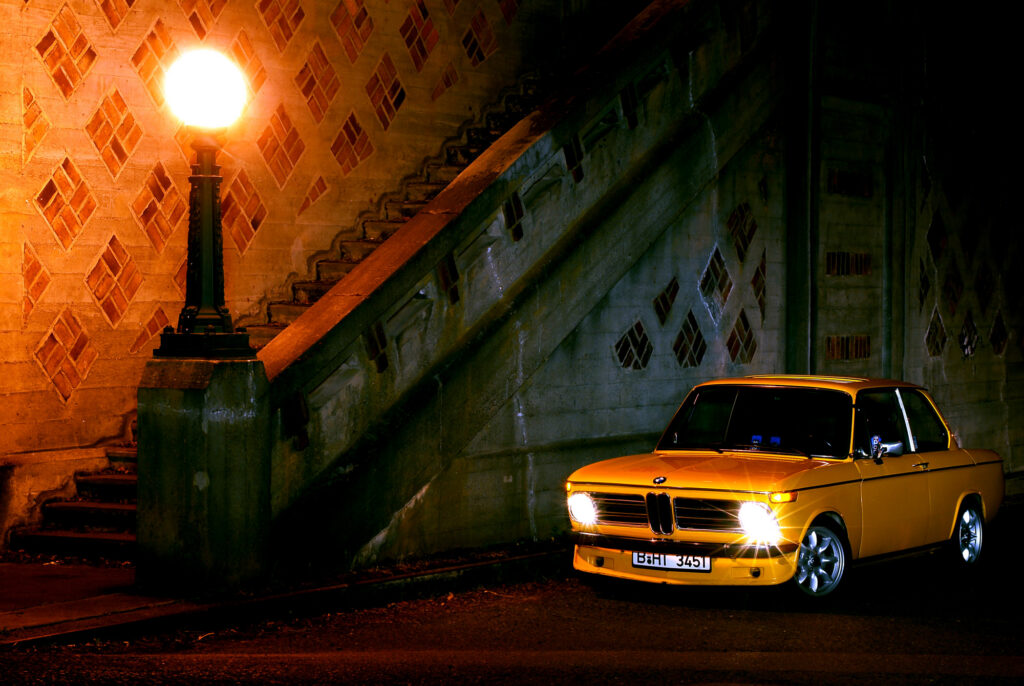
This was a shot taken a long time ago when I was still figuring out the whole night photography thing. This image was actually created by three people. While two of us wielded different lights to control the color and exposure the other one tripped the cameras shutter. The main exposure was set to the street light next to our subject since that was our only constant. I wanted the street light to keep that warm yellow color to balance against the yellow car. By using a 3 million candle power spotlight to illuminate the car and an off camera flash to light the wall behind it and to accent the chrome on the little BMW.
The Story Behind the Shot:
Vicuña and Volcanoes at 16000ft
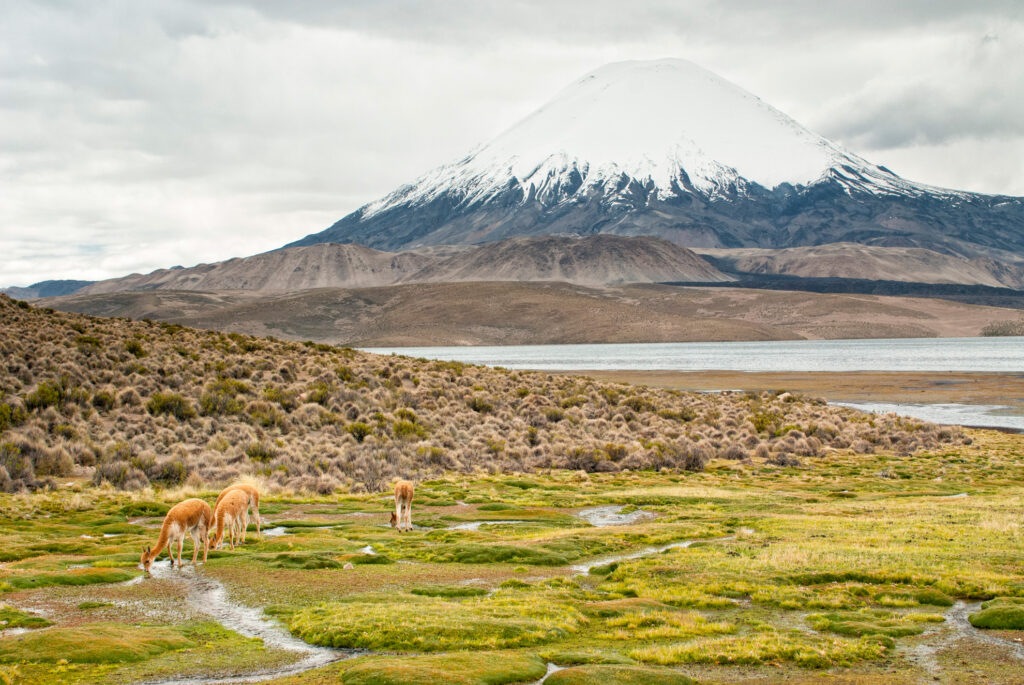
Maybe its because I am in Chile right now, but I seem to be gravitating towards pictures I’ve taken here. Seven years ago I spent about three and a half months wandering around Argentina and Chile. Towards the end of the trip I visited a park that not even many Chileans seemed to know about, Parque Lauca. This park sits on the border of Chile and Bolivia at an altitude of between 14,000ft (4300m) and 20, 000ft (6300m). The lake in this image sits at about 16,000ft (4900m). I was staying on the Northern coast of Chile near Peru in a city called Arica. There are many tours that take you to this park and back in a day and most of them carry oxygen in the vans because of the rapid ascent from sea level to this very high altitude over a span of 4 hours. They stop in a town about half way up for you to acclimate but there is no way you can do so during the period of a lunch, it would actually take days. When you arrive at the park, there are three perfectly conical snow capped dormant volcanoes in a row. Unfortunately unless you arrive in the morning it’s almost always cloudy. The animals you see in front of the volcano are called Vicuñas and are in the camalid family making them a relative of Llamas. They only live in very high altitudes and are prized for their incredibly soft wool. The wool is very expensive mainly because they can only been sheered once every three years and have to be caught wild. I lucked out getting a shot of these little guys feeding right in front of one of the volcanoes. After being at that high altitude for only 20 minutes everyone was getting light headed and weak in the knees-a clear sign that it is time to start back down to sea level. Before we started our descent I figured I would try an experiment. I sealed an empty 1.5L soda bottle to see how much it would compress from the difference in atmospheric pressure. By the time we got back to sea level it had compressed so much that the sides of the bottle were touching.
The Story Behind the Shot: Pumas in Patagonia
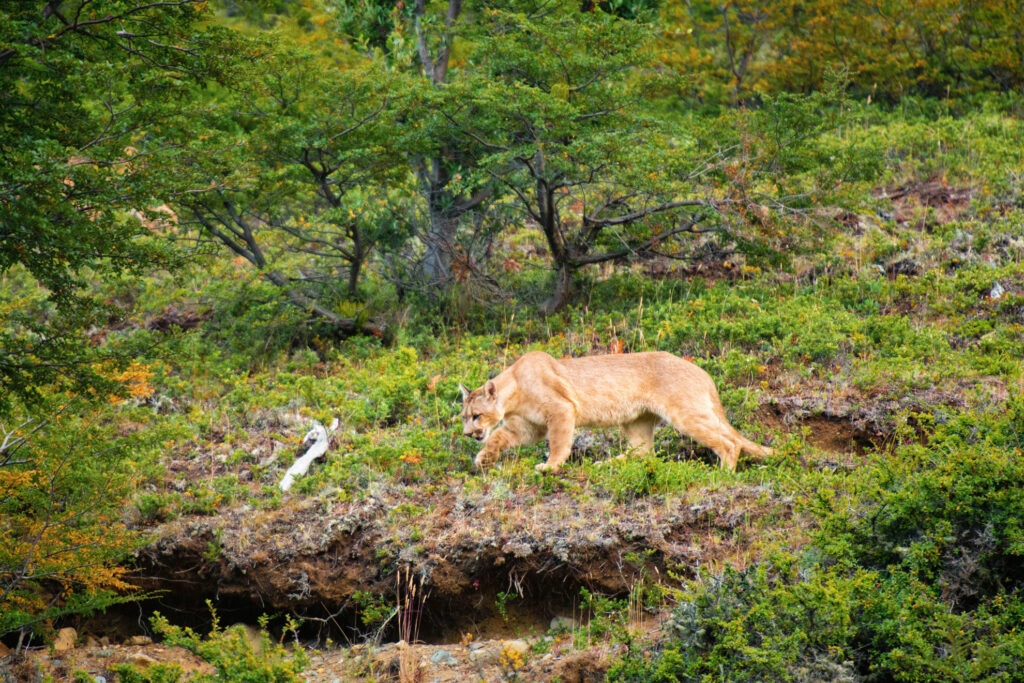
Anyone that knows me or my photography knows I love photographing animals in the wild. All of the wildlife images on my website have been captured in the wild and that is something very important to me. Part of it is capturing the actual image, but seeing how animals act in there natural environment is an experience I relish. I have been lucky enough to have traveled all over this great big world, and have seen quite a variety of fauna. Until a few weeks ago, pumas (cougars) were high on the list of animals I wanted to encounter and photograph. I just returned from Chile scouting locations to take a photo workshop in 2016. A little more than half of the trip will take place in Torres del Paine in southern Chile. This park is quintessential Patagonia. Windswept landscapes, rugged mountains and a host of wildlife you won’t see many other places just scratch the surface of this amazing place. I knew there was a population of pumas dotting the national park, but being one of the more discreet apex predators, my hopes weren’t high for seeing them in person. When we arrived I spent quite a bit of time talking to a ranger in the park about possible habitats. She referred me to an area where two pumas had been known to feed on guanaco (a llama like animal). I had some time to kill before I started my trekking within the park, so I hiked up to the area she mentioned. Within a 10 minutes of hiking I was already encountering guanaco carcasses and bones. It was like a grave yard up there. Still too early in the day for a puma spotting, I made my way back down with plans to return here after my trek was complete. At the end of my trek I encountered a buddy of mine that guides in the park and relayed my “puma hunting” plans to him. He told me there were actually a couple of pumas known to hunt hares at dusk not too far from the campgrounds I was staying in, much closer than the first area I was told about. This news got me pretty excited. After dropping my bags in my tent and eating a quick meal of dehydrated backpacking food, I set off with telephoto lens in hand (unfortunately I left the largest lens in a town near by for weight concerns during my trek). As I walked into the hills behind my campsite, hares were running out of every corner you could see and over the crest of a hill in front of me. I decided to follow the hopping puma buffet for a bit and see what I found. As I crested the second small hill I saw a bit of movement in the distance about 500ft (150m) away. Much to my surprise a puma was staring directly at me. My fight or flight instinct kicked in and I successfully beat down my first instinct to get the hell out of there. I moved a bit closer to a few small trees to inhibit another one sneaking up on me and began observing. A second puma started walking towards the first one which stopped caring about me and offered a newly caught hare to its companion. The photo you see to the left was my first encounter in the wild with pumas, and a memorable one at that! After shooting this scene for a bit and not wanting to tempt fate too much longer, I slowly started to back away from this pair. Once out of sight and with a safe distance between us I ran down to grab my friends and tell them about my encounter. Upon hearing this one of them came back with me to try and get a few images himself. By the time we made it back to the same spot, the pumas were gone. Not knowing where they had roamed to, we left the area to safer grounds. Not too much later we decided to head back and try and find the pair again. We made it about a third of the way back to my previous siting area when we found one of them on a hillside. We slowly followed the puma for a moment when it joined up with its companion again and kept walking for a bit. The two pumas, obviously not caring about my friend and me, laid down on the hillside about 60 ft away from us to digested their dinner. After a while my friend and I left the two pumas and retreated to our campground still in disbelief that we were able to share such a rare experience with two amazing and powerful animals.
Story Behind the Shot: The Dalai Lama’s 50th Anniversary of Exhile from Tibet
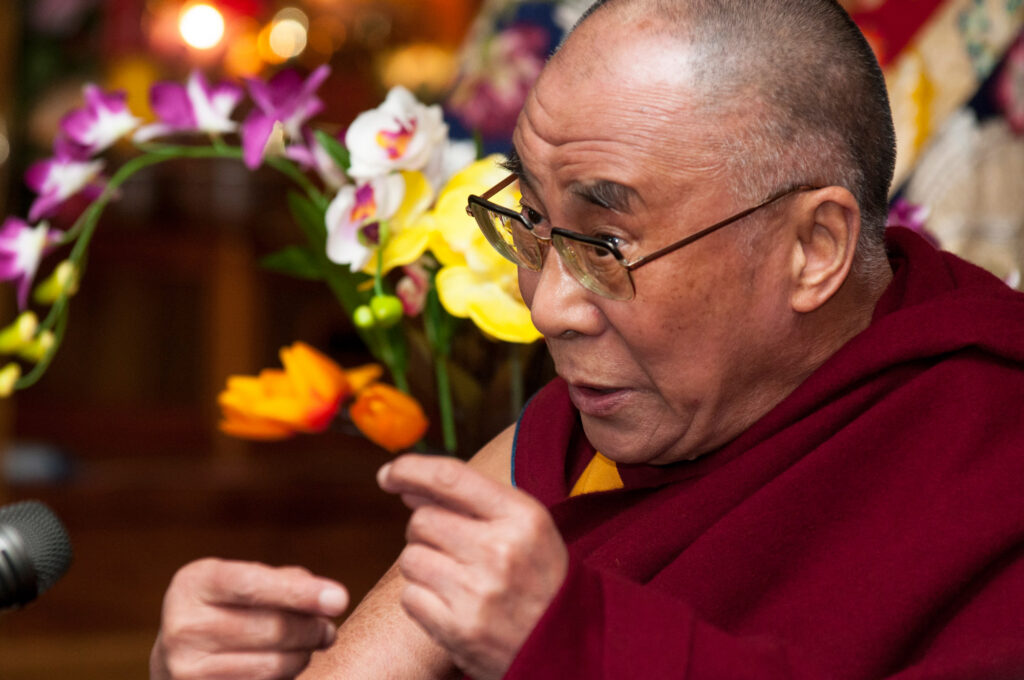
This is a very special Story Behind the Shot for me. I have a knack when I’m traveling of finding myself in unique or fantastic situations, and this one may top them all for me. Six years ago I spent a little over three months roaming around Nepal and India. Towards the end of my trip I was planning on heading into the Himalayas to Dharamsala, the town in which the Dalai Lama lives. I read he would be leading a teaching during my visit, and was excited to be there to see him speak at his home. I just finished riding camels around the desert along the boarder of Pakistan and India for a few days and was looking forward to getting out of the 110 degree (44c) heat and into the mountains (my natural habitat). I ended up going to Dharamsala a few days before I originally planned to, and it’s a good thing I did. Once I arrived in this city of just under 20,000, mostly populated by monks and Tibetan exiles, I learned that not only was there a teaching, but it was about to be the 50th Anniversary of the Dalai Lama’s exile from Tibet. Two days after I arrived roughly 75,000 people descended on the town for the following weeks events. A lot of the new arrivals were press or Buddhist pilgrims. Everyone from CNN to National Geographic had boots on the ground to report on this historic event. I have no press credentials and at the time had very little professional experience as a photographer, but this didn’t stop me from trying to get a press pass. If you didn’t have one, they wouldn’t even let you bring a phone that had a camera on it into the grounds. For me, someone physically attached to his camera, a press pass was the only option. I was hanging out with a rag tag group of independent journalists that were sent by newspapers and magazines from Japan, Canada and Spain along with a few documentary film makers. When they went to get the passes that were waiting for them, I made my first attempt at getting one and was shot down immediately. This didn’t mean I was going to give up. For the next three days I’m sure my butt made an indentation in the seat in the press office of the Dalai Lama. Eventually, the day before the big event started, a kind secretary took mercy on me, butted in front of some reporters getting their passes and refused to leave her bosses office until they gave me a press pass. I am still eternally indebted to her for making this amazing few days of my life possible! The following days were full of press conferences (the first I ever attended) and speeches by the Dalai Lama. After the his main speech over 50,000 people gathered in the streets for demonstrations. This was the most substantial piece of history I have ever been present for, and at one point I teared up in the middle of the streets when the reality of the enormity of the event hit me. Today is the sixth anniversary of the Dalai Lama’s exile so it only seemed fitting that I share this story with you today instead of the usual Tip and Trick. Since I am not a journalist or press photographer, it is unlikely I will have an opportunity like this in the future, but am forever grateful for the experience I did have.
Long Time No See!
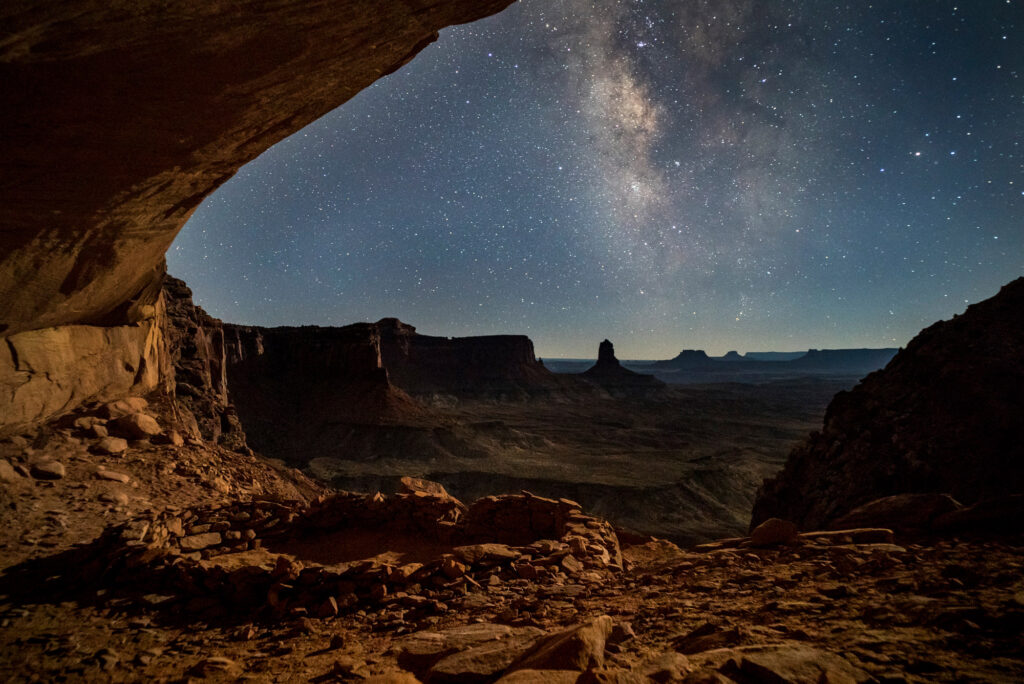
It’s been almost a year since I’ve written anything on here, and I apologize to anyone that was following regularly. A lot has been going on behind the scenes over here as the recent change of Facebook and Instagram names may have hinted. Soon I’ll be able to let you in on a few of the projects I’ve been working on. During my hiatus from writing here I’ve been lucky enough to roam a few regions in Mexico, along with driving through 20 states and visiting 15 national parks. The image above was taken in Arches National Park during an annual workshop that I lead in the Moab, UT area. As many people that know me have probably assumed, I love to use the light of the moon or the stars to often illuminate my landscape images. Even when I was younger I was quite a bit of a night owl. Staying up until well after midnight watching the Honeymooners on Nick-at-Night when I was 10 years old felt like a badge of disobedient honor that I could wear proudly. In my teens my love of staying up late and not waking up early did not waiver! Waking up just before 6am to catch the bus to high school was like some kind of medieval torture. During my brief stint in college I made sure to schedule the classes that started as late as possible. When I started getting intrigued by photography I was shooting slide films and using graduated filters to balance the light in my landscape images, something I still do to this day in my daytime digital work. Fatefully I stumbled across a coffee table book (in the days before sites like Flickr or 500px) that was entirely night photography. Not only was I captivated by the star trails that seemed to encircle cacti or mountain tops but by the way you could wander around in your shot “painting” things with light to create a glowing crack in a rock or interior of a car. Immediately I started finding out everything I could about shooting at night. This was in the days before digital so not only did I have to learn how to take a picture in minutes instead of fractions of a second, but I also had to learn about how different films worked during long exposures because of an effect called reciprocity failure. Luckily I was working at a camera store and got discounts on my film and processing, because it still cost a fortune to figure out the basics. I would write the specifics of each shot along with the number of the frame to try and learn from my data matched to the result. For people learning these days with digital, you don’t know how good you have it with the metadata being stored with each shot. I sound like an old man, “Back in my day we didn’t have playback buttons! I had to walk 20 miles in the snow up hill both ways just to see if my pictures came out!” But I digress, in these days of digital there is always an ability to go back and look at your exposure information to try and figure out what’s going on. This makes the learning curve with a new technique go through the roof. Flash forward to current times and I am still drawn to both staying up late (still wearing that childhood badge) and photographing landscapes at night. Don’t get me wrong, I love the challenge of using graduated neutral density filters to balance the light in my sunset (and occasional sunrise images), but using the differing cycles of the moon to create a surreal look within an image will always hold a special place for me. Not only that, but a place like Turret Arch pictured above, there will be thousands of people herding through during a sunset. As soon as the sun goes down it’s you and a few other intrepid souls in these amazing places. There is a place I take people to on the last night of my Death Valley workshop where if you can’t see headlights approaching on the road, rest assured you are the only person for a 20 mile radius in any direction. To be able to experience that in a National Park that has nearly 1 million visitors a year is an incredible feeling. Now that I am teaching and sharing my techniques and favorite locations, I love seeing people light up in the field when they create that first exposure that has them saying, “Holy crap! I just shot that?” With night photography being so different from what people are used to seeing and also photographing it is always fun to see it click when someone figures out how easy it actually can be! I am heading back out on the road now to scout for another workshop in 2017, but don’t worry, I won’t keep you in radio silence like this again! I’ll be posting regularly from my adventures along with a few new projects that I will be able to share with you in the not too distant future.
A Coffee By Any Other Name…

As a resident of the beautiful Pacific Northwest, and namely Seattle, it is mandatory to keep a blood/coffee level over .08%. For my chosen career path I end up on the road quite often, and when traveling the highways and byways of this vast country it never ceases to amaze me how culturally different we are from one corner to another. When it comes to something like coffee, a beverage that is loved, shared and coveted all over the world, this is no less the case. My normal morning brew is a 12oz drip coffee with a shot of espresso poured in it. Add a couple raw sugars and some cream and you have a happy traveler! Where I live if you take out my additives this drink is known as a Shot in the Dark. Seems logical to me and still like an appealing beverage. As you venture more towards my original homeland in the eastern part of this country my drink starts to become a Red Eye. This name I find is also shared with the majority of California. Now, this is still a logical name since I’m sure the majority of people that get this are pretty tired to want that much caffeine, but we are starting to get away from the delicious sounding end of things. I just returned from my first trip to Alaska trying to figure out some logistics for an upcoming Northern Lights workshop (probably winter 2018, but now I’m thinking more of Norway for this trip instead). When ordering my beloved morning eye opener in Alaska with the two names I was familiar with I was met by blank expressions and questioning eyes. After describing the potent potable (that one is for you Alex Trebek!) I was told that in the Great White North it’s referred to as Sludge. Some times even known as Death Coffee. Pretty sure that first one might be an creation of the oil industry in Alaska and the second, well I guess those Alaskans might not be as manly as they thought if they can’t take a little shot of espresso in their coffee. As far as the feeling I had every morning ordering a cup of sludge, lets just say it certainly made me second think my choice morning beverage! Now I am safely back in the world of Shots in the Dark for almost a week before I return to the west coasts land of Red Eyes. Whatever you call it I’m still knocking them back day by day. A few years ago though I did try to start the trend of calling them An Americano with Hair on It’s Chest. Needless to say that didn’t catch on!
Random Road Trip Discoveries
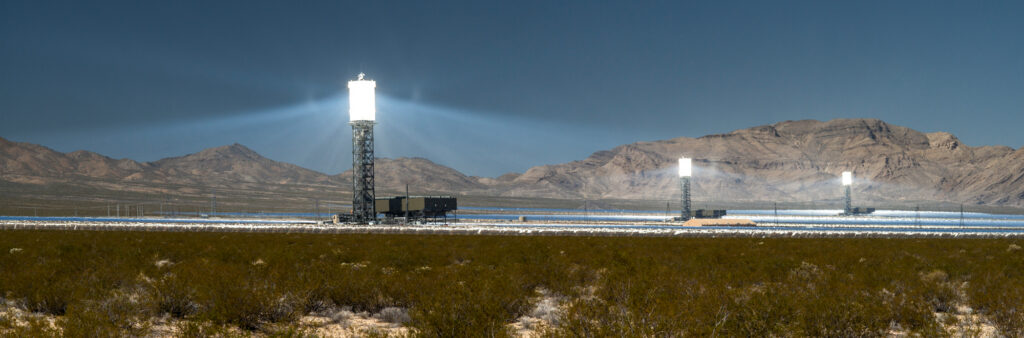
When driving between Las Vegas and Los Angeles, you may notice three incredibly bright towers on the north side of the highway. These gigantic contraptions are known as Concentrated Solar Power or CSP. By directing immense amounts of light off of mirrors to a single source, heat energy is generated and then creates steam to power turbines. At this time though, the future of CSP is in danger. There are large arrays in Spain, the Middle East and still a couple more planned for production, but the average plant is either loosing money or producing far under the expected outputs. With the price of photo voltaic cells (standard solar panels) coming down, the cost per mega watt isn’t really panning out. Regardless of their future viability as an energy production means, they still make for some great photographic subject matter!
Whoops, I Ended up in Las Vegas on St. Patricks Day
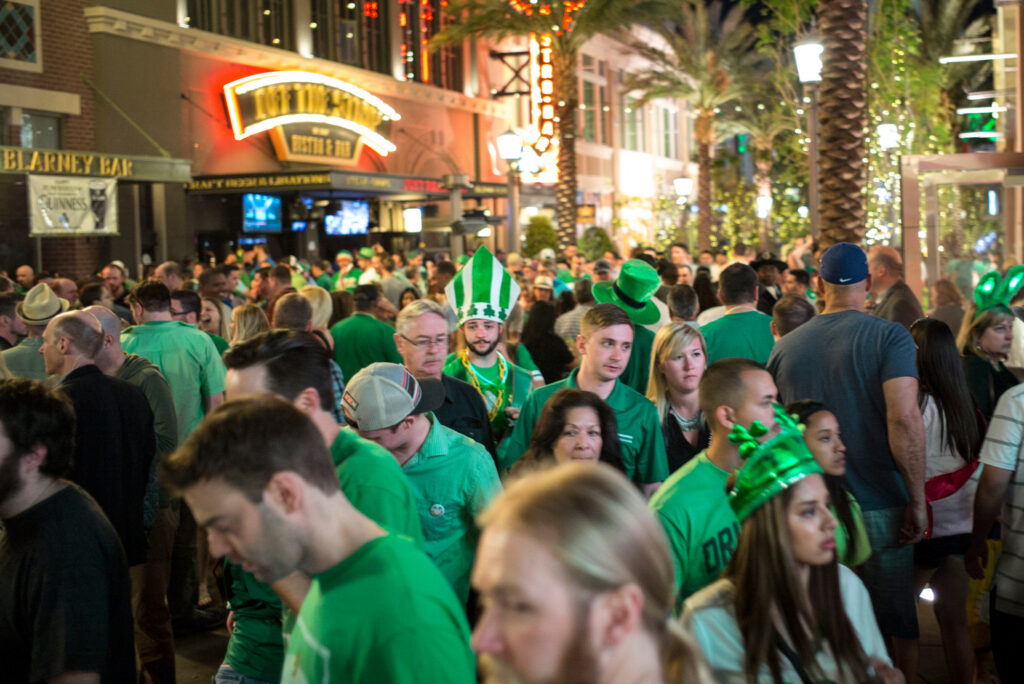
After the completion of my annual Death Valley workshop on night photography I had to head to Los Angeles to teach a few classes for Samy’s Camera and also speak to a camera club in Santa Barbara. When I was about to leave Death Valley I realized I would be heading into LA at the height of traffic. If you have been to LA, you know how much you want to avoid this if possible! After asking Siri, I figured out that it would only add an hour total to my trip if I headed to Las Vegas for lunch. There is a great Mediterranean restaurant in the Cosmopolitan that has a 3 course set lunch for about $25 that could be one of the best food deals in Las Vegas (I am a serious foodie, I just don’t burden you with pics of meal that passes through these lips). Anytime I am passing through Las Vegas during their lunch hours I make it a point to head there. Once I finished my meal and started to head to my car to commence my drive to LA, I noticed an abundance of people wearing green. Now, I don’t drink and I was in the desert for a week and a half previous to this with next to no outside communication, so I had no idea that I stumbled into Las Vegas on St Patrick’s Day. As a street photographer I felt I had a duty to wander around and capture some life happening. I also ended up filming a few time lapses through the evening, but the shot at the top of this post stood out to me after the night was over. At first I of course noticed the sea of green in front of me and that the only person looking into the lens was wearing a pope hat. After I showed the image to a friend she notices that out of all the “happy people” wandering around Las Vegas on this tipsy holiday, only two people in the background of the image are smiling. Now I’m not really sure if this is a reflection of the true psyche of the average drunken Vegas wanderer or just a coincidence at the time I snapped the shutter, but it certainly is a picture that is worth a thousand words.
Mountain Goats Usually Win in a Game of King of the Hill
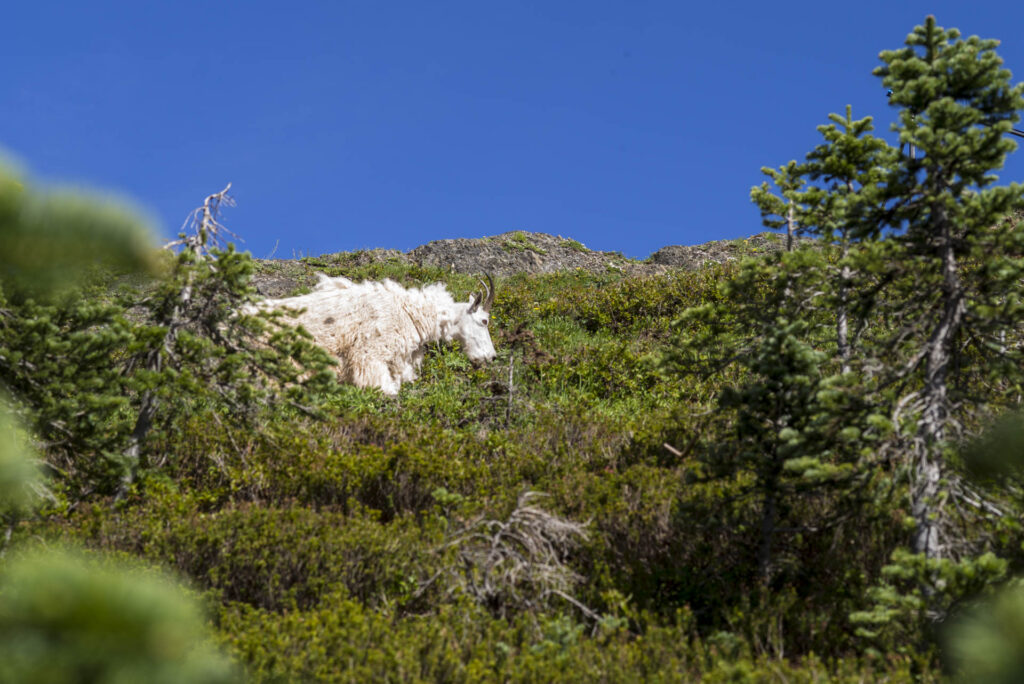
After wrapping up a trip to the amazing Washington Coast with a fellow photographer and a model, we decided to stop by Hurricane Ridge in the Olympic National Park. This National Park is high in the Olympic Range with sweeping views of the surrounding mountains, the salt water of The Strait of Juan de Fuca and the southern coastline of Vancouver Island in Canada. This is a place I have been to quite a few times and while my friends went off to explore and shoot on their own, I set off to a high viewpoint to film a time lapse of the clouds forming over a valley. This park is not only a beautiful alpine vista, but it’s home to black tail deer, black bear, mountain lions and mountains goats just to name a few. The first three are endemic to the area while the mountain goat, although endemic to the nearby cascade range, is an invasive species introduced to the Olympics in 1925 more or less for the novelty of having mountain goats there. Over the years, especially in the last decade or so there has been an increase in the population, and also an increase in the aggressiveness towards humans in the area from the goats. In 2010 a man was fatally gored by one while eating lunch on a hike in the Olympics. He was able to get his hiking companions out of danger and tried to wave the goat away. The goat speared him in the thigh, severing his femoral artery and then it stood over the man until he bled out. One of my greatest passions is wildlife photography and I have encountered mountain goats in the wild before in a few different areas. When photographing any animal, whether it be a chipmunk or a rhino, you want to respect the animal and give it space. Once the demeanor of the animal changes, it’s too late. It feels harassed and even if it doesn’t run away it’s now on guard and you won’t be getting any natural looking uninterrupted images. This is also the threshold where you can get yourself into some serious trouble. It is important to research the behaviors of animals a bit before you put yourself in a situation with a large or dangerous animal. That way you can hopefully get a feel for when things are about to go bad. That being said, not every animal is easy to decipher. Some animals are very obvious in their intentions while others can become aggressive at the drop of a hat. As humans we tend to anthropomorphize and project our feelings on animals. The only way to truly get a feel for an animals behavior is to spend time in the field observing your subject. For evidence of this look no further than the string of attacks recently in the news of people getting too close to animals at Yellowstone or trying to take selfies with dangerous animals. Two people were killed recently while trying to take a selfie with a wild walrus. A walrus, I mean come on, that is Darwinism ladies and gentleman! Let’s get back to the matter at hand here. The time lapse that I intended to take was going to be 720 images over the course of an hour. That equates to an image every 5 seconds. I use a Dynamic Perceptions Stage One rail system to move the camera between frames and it also triggers the camera for me. I had this traveling across 80 inches of rail over the course of the hour. After setting it up I headed about thirty feet away to sit in the shade and enjoy the beautiful views while my time lapse was being shot. Over the course of the next half hour I answered the standard questions people have as they walk by and see an elaborate camera set up that if foreign to them like, “What is that thing, a professional selfie stick?” Yes, two separate people more than twenty minutes apart asked that. Just about half way through my time lapse a hiker that I had just seen a couple minutes before head up a trail was returning back down my way. He approached me and said, “There’s a large aggressive mountain goat up there herding people off the trail and he’s heading this way. Can you tell people so they don’t go up there?” I wasn’t planning on going anywhere for another half hour or so, so I gladly accepted the responsibility of trail supervisor. About a minute later I caught site of the goat and he certainly was a big one! He was still about a quarter mile away so I watched from my shaded perch as he weaved in and out of the tree line. A moment later I saw another adult followed by a kid. Now this started to make sense. The large male was clearing the way for the babies that were following behind. Sure enough a moment after that a third adult followed by a second kid joined the group. As I watched them congregate still in the distance I did have to thwart the efforts of a few intrepid hikers that wanted to keep on their intended path. With about ten minutes left on the time lapse the big male started to head down my way. A couple from the UK that were traveling through the states had joined me as we watched the large animal slowly make its way towards us. When he started to get a couple hundred yards away it became fairly evident that my camera gear was going to be along his path or at least closer than I wanted it to be. I went up and grabbed the camera off the time lapse rig so if he bucked it off of the 500ft cliff it was perched over, at least I’d still have my camera. When I looked back he had closed off my