
The Story Behind the Shot: A Sunrise with the Stars
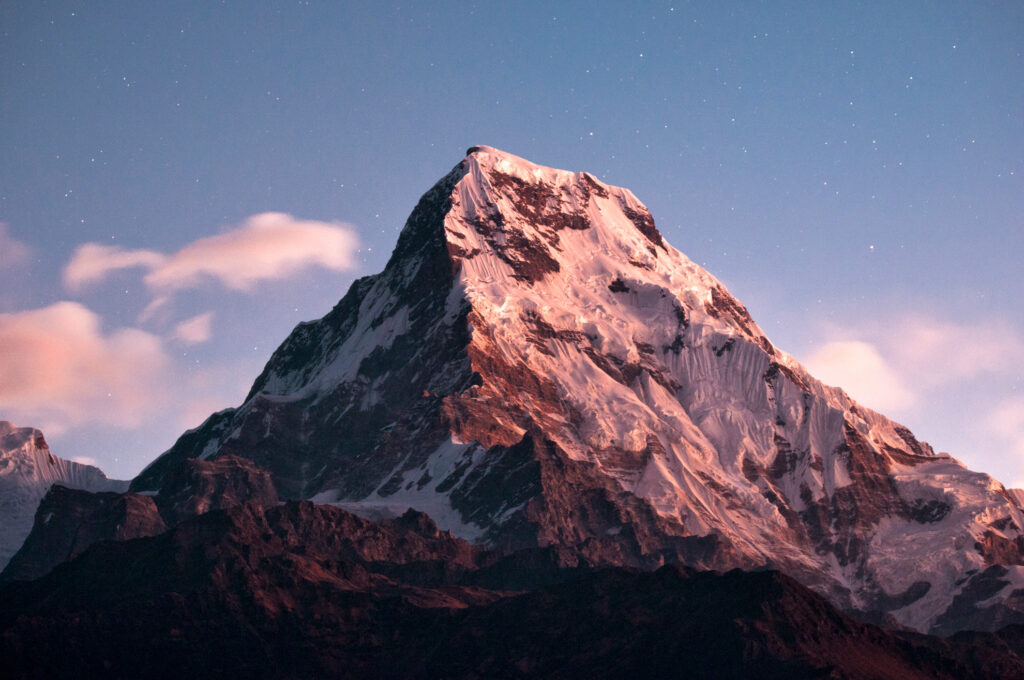
If you saw my last “Story Behind the Shot,” you may have noticed it was also taken in Nepal. This shot was taken on my first trip there in 2009 – five years before the rhinoceros shot. I was three days into a short five-day trek in the Annapurna Range of Nepal. The highlight of this micro trek was the sunrise at a place known as Poon Hill. This viewpoint sits at 10,531ft (3210m) above sea level. Most people spend the preceding night in a small village called Ghorepani (pronounced: gore-eh-panee). This literally translates to “horse water.” Ghorepani got its name because it was a rest stop for ancient traders who knew there would be reliable water for their horses. This small town sits at 9429ft (2874m) leaving us with slightly over 1000ft (304m) to arduously ascend in one mile (1.6km) before sunrise. At the time I was traveling with a friend from Germany who had been to Nepal many times before. Accompanying us was a guide and now friend of mine named Achyut, who brought a friend of his to act as porter for us. It had been a cold night with little sleep when Achyut came to rouse us at 4am from our uneasy slumber. We quickly packed our sleeping bags, threw on our layers and readied our backpacks to leave. After a quick cup of tea we headed for our sunrise spot. To make the sunrise we kept a brisk pace. Although the porter was carrying most of my backpacking gear, I still had about 30lbs (14kg) of camera toys on me. Combine lugging the toys and hiking with two Nepalese people who are far more accustomed at 10,000ft than me and you have one winded and tired Brian! No matter where I am when I am hiking under extreme weight or difficult conditions, I enter an almost meditative state. I must of fell into one of these because the next thing I knew I was on a mountain top with about 100 other people awaiting the sunrise with the grandeur of the Annapurna Range confronting me head on. This is a very picturesque mountain range with peaks topping out at 26,545ft (8091m). This photograph is of the highest mountain in the range – Annapurna I. Depending on who you ask, this mountain and K2 in Pakistan battle it out for the deadliest mountain in the world, much more dangerous to summit than Everest. We arrived early enough to start shooting before the actual sunrise. I love to shoot then because the subtle colors in the sky aren’t so dramatically overwhelmed by the direct sun on the subjects (a time known as blue hour). In this case a result I’ve never seen nor would have anticipated occurred. Because of the altitude, the sunrise that was still twenty minutes or so away, was projecting warm light on the mountain and clouds without overwhelming the normally faint stars behind it. Still to this date I have not taken or seen another photograph where this occurs. During sunrise I continued to snap away and fill the role of, “you have a tripod and must be a pro, can you take our picture?” person. After getting our own standard tourist in front of an amazing place picture, we started our two day descent back to civilization.
The Story Behind the Shot: Being Bear Bait, by accident…
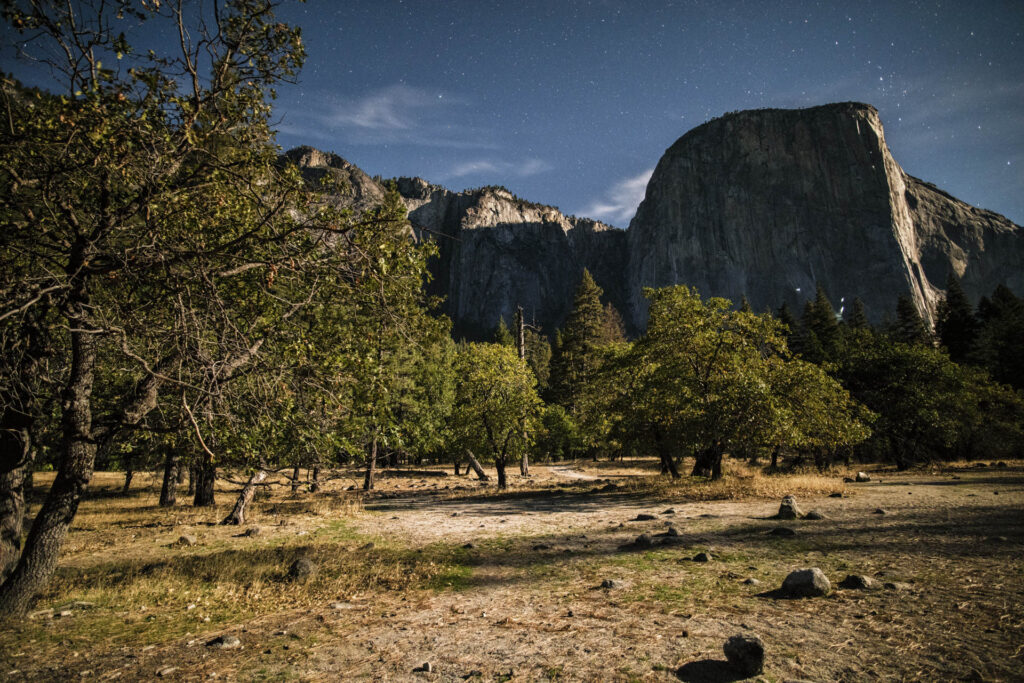
It’s no secret that I like to go on road trips. After teaching a workshop on night photography around Arches and Canyonlands National Parks in Utah, I spent about three weeks driving west and then north scouting future workshop locations. In all my travels I’ve never made my way through Yosemite National Park and decided that needed to change. My friend Sergio knows the park well and met me there for a couple days. There were forest fires outside of the park causing smoke and haze in the air. This did end up cutting my time there short, but not without first shooting a bit at night. Sergio is not a photographer, but was totally willing to come with me for some shooting. We pulled off at a viewpoint on the way down to the valley floor where I took my first exposure of the night. When the image came up on the screen Sergio caught a glimpse and couldn’t believe I had just taken that bright of an image at night. After a brief explanation of long exposure, I offered to let him use a d800e I had with me and my 24-70 2.8. We made our way down to the valley and found a clearing that we could shoot in. I gave him some basics for exposure at night and focusing and over the next forty-five minutes we happily clicked away. This specific image is of El Capitan. The points of light you see on it are climbers either settling in for the night or completing their ascent after dark. We noticed that a cyclist out for a night ride had pulled over to the side of the road about 100ft (30m) away. Most people when they see you with a tripod in the middle of the night are wondering what the heck you are taking pictures of. Expecting this to be the same with our new onlooker, I offered up a greeting. “There’s two bears crossing the street slowly headed for you guys,” was the response we received instead. At this point I think we decided we had all of the images we needed for the night and hastily packed up our gear. The next day I followed Sergio back to his house north of the park for lunch before driving to the coast. After introducing me to his girlfriend, the first thing out of his mouth was, “wait until you see these pictures I took. You’ll never believe it was nighttime!” As someone that gets great joy from sharing with others something I enjoy so much, I couldn’t have been happier!
Woody’s World: Woody Goes Camping
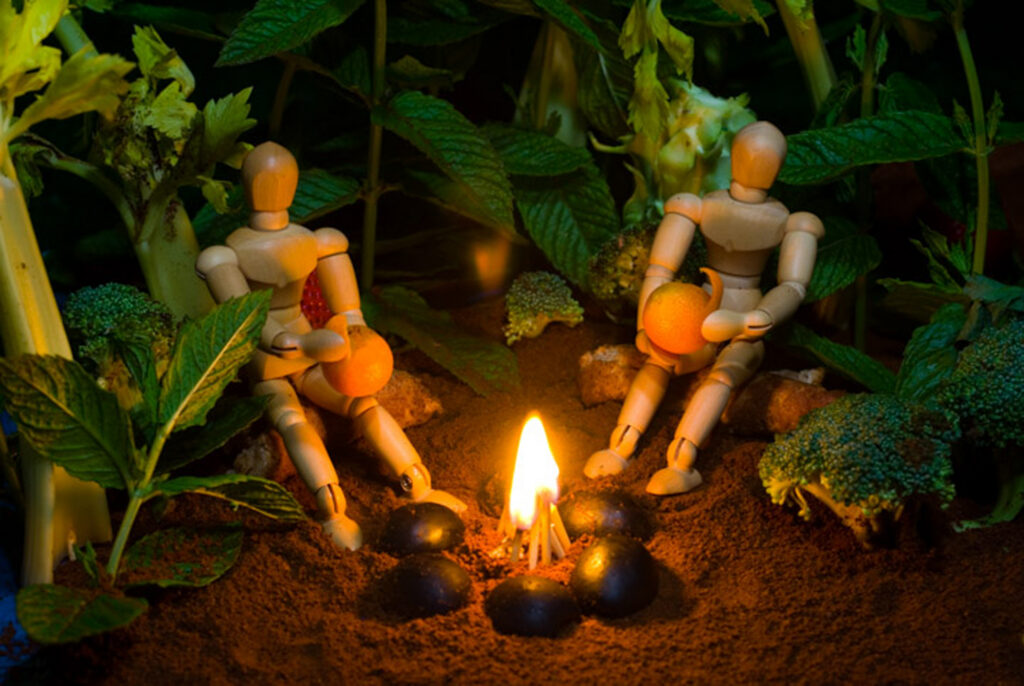
As a new edition to my Story Behind the Shot series, once a month I will be sharing a glimpse into Woody’s World. Living in Seattle, we have some gray and rainy winters. When I am not traveling to nicer weather, I will fill the occasional down time in the studio. These are an ongoing series with wooden mannequins and a whole lot of imagination. Living in the northwest gives me plenty of opportunity to enjoy nature. Woody also likes to get back to basics. Here, Woody and his friend enjoy some oranges near the campfire after a hard day of hiking. Everything in this shot is edible (except for Woody). For the dirt I used coffee grounds. For foliage I used broccoli, celery and mint leaves. The logs they are sitting on are rolled bread heels. The rocks around the fire are olives.
The Story Behind the Shot: Kiva
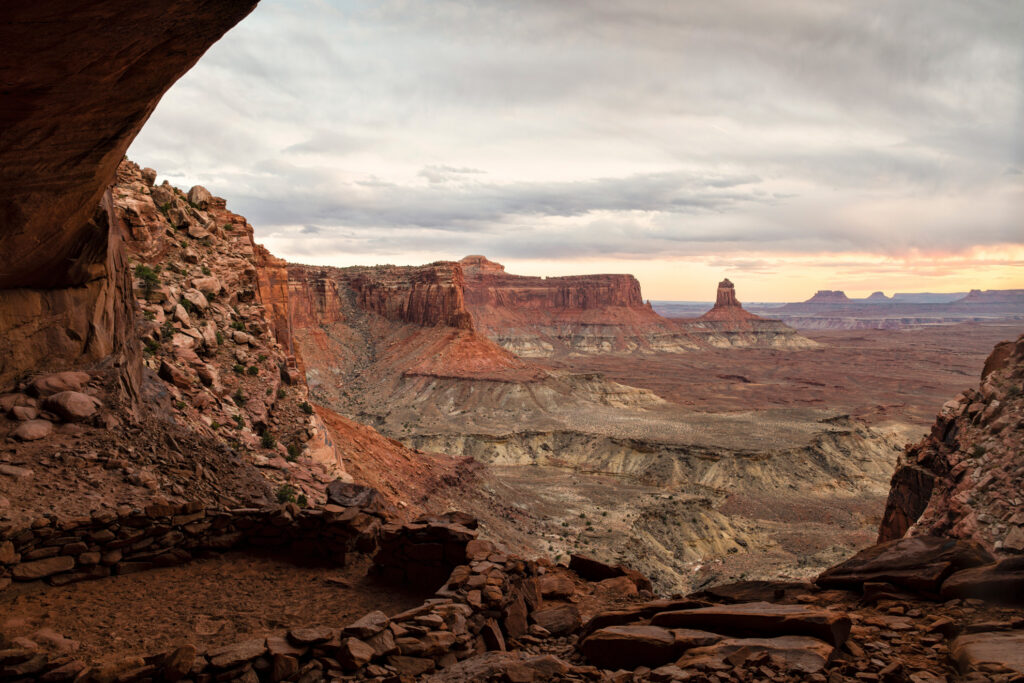
There are some places I have encountered in this world that have a truly special feeling to them. The location in this image is definitely one of those places. A kiva is a man made stone circle used by the Puebloans for religious ceremonies. This specific site is of unknown origin and usage, but resembles traditional kivas and therefore was given the name False Kiva. This is designated as a class II archeological site, which means it isn’t on the map for the National Park it resides in, and the trail head is unmarked. They do this in an attempt to limit the amount of public traffic to preserve the site. The hike begins down the road from another trail head, which is also unmarked so it took a little exploring to find the start. When we found cairns (stacked stone markers) leading into the distance, we knew we had found the trail. After about two miles of winding our way through the desert we came to a cliff side. At this point it would be good to tell you that both my hiking partner and I are afraid of heights and as you start to approach the cliff side that contains this cave the terrain looks more and more daunting. Almost every corner we approached had us saying, “I don’t know about this, do you want to head back?” Luckily we kept trudging along and by the time we reached the more intimidating parts, they didn’t look nearly as bad. After we scrambled our way up the cliff side into the cave, we introduced ourselves to the other photographer in there who was also waiting for the sunset. Following Murphy’s Law, the clouds were working their way in by this point to end the otherwise clear day. There is a similar image in my landscapes gallery taken a couple minutes after this one. In this image the clouds are still yielding to the sunset’s warm light. We were planning on doing a little night shooting from here, but the weather had different plans for us. After the clouds took over we joined our new cave dwelling friend and started our return hike to the car. Update: So I made it back the next year for a little night shooting and it was totally worth it. Take a look:
The Story Behind the Shot: Amazon Jungle
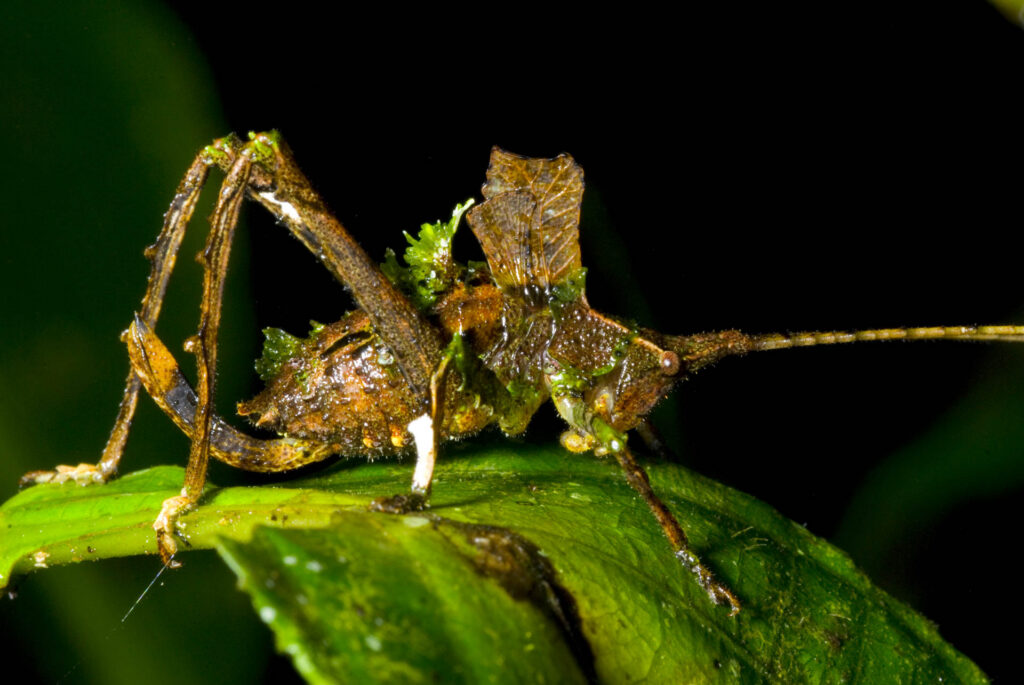
In my travels I have come across some odd looking animals. The jungles of this vast planet provide some of the craziest I’ve seen. The first tropical jungle I ventured into was the Amazon. One hell of a way to be introduced to jungles! I was staying in a town high in the mountains above the forest floor. To descend into the Amazon we started the day on mountain bikes and then after lunch transferred to white water rafting. When we finished our decent by river there were vans waiting to take us on the last bit of the journey to the huts I’d be calling home the next few days. The majority of people were leaving the next day while I spent a couple more days roaming around with my guide. On my last full day, a Danish couple was arriving via the same adventure travel route I had taken. When they arrived there was nothing they desired more than sleep. Just before they went to bed a huge downpour came rumbling through. After it had subsided my guide and I went out by ourselves for about two hours just flipping over leaves seeing what kind of odd things we could find. In that brief period of time we found over sixty different types of walking sticks and crickets-let alone all of the spiders, beetles and other random things. The cricket pictured above was probably one of my favorites. The fact this insect has evolved to look like a rotting leaf with algae growing on it still blows my mind!
The Story Behind the Shot: Car On A Seattle Highway
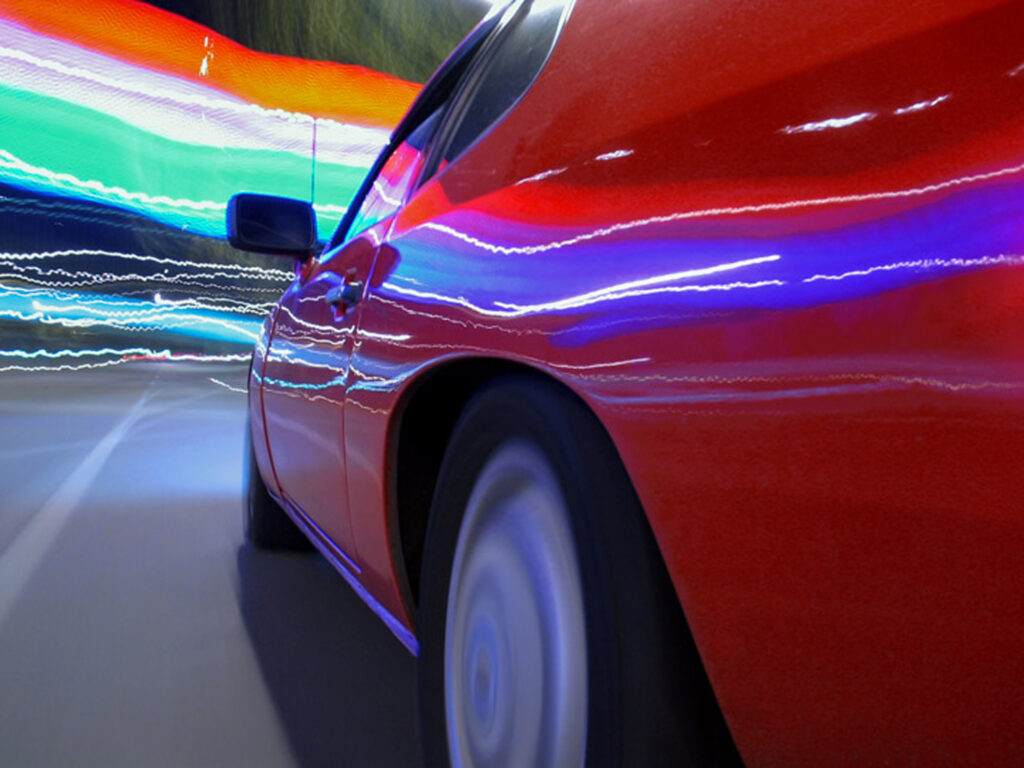
This one brings back some memories. I made this image back in 2006. Another one of those periods when I had too much time on my hands and decided to kill it by taking some atypical pictures. I figured it a good idea to use gaffers tape to attach my tripod to the bumper of the car I had at the time. I used an infrared remote to trigger the camera that would only work if I bounced it off the mirror on the drivers side door. For the setting I chose a secondary highway in Seattle just around the corner from my house. The main reason for this location was a huge neon Pepsi billboard just off the road. It also had an exit one block after the entrance for hopefully a safe, quick on and off for me and my gear. After pulling over in a parking area to set up my rig and find an angle I liked, I settled on an exposure with a six second shutter speed. This gave me enough time to get on and off the highway with a slow pan across the bright sign. After waiting at the stop sign for a large enough gap in traffic, I tripped the shutter and slowly made my way onto the highway. The shutter was open as the camera panned across the sign resulting in the streaks of bright color in the top left of the frame. Most of the exposure was made as I was driving on the highway giving the impression of the car traveling down a straight road. This ended up being one of those rare occasions that a complex shot worked out on the first attempt!
The Story Behind the Shot: In Loving Memory of Yolanda Falcone
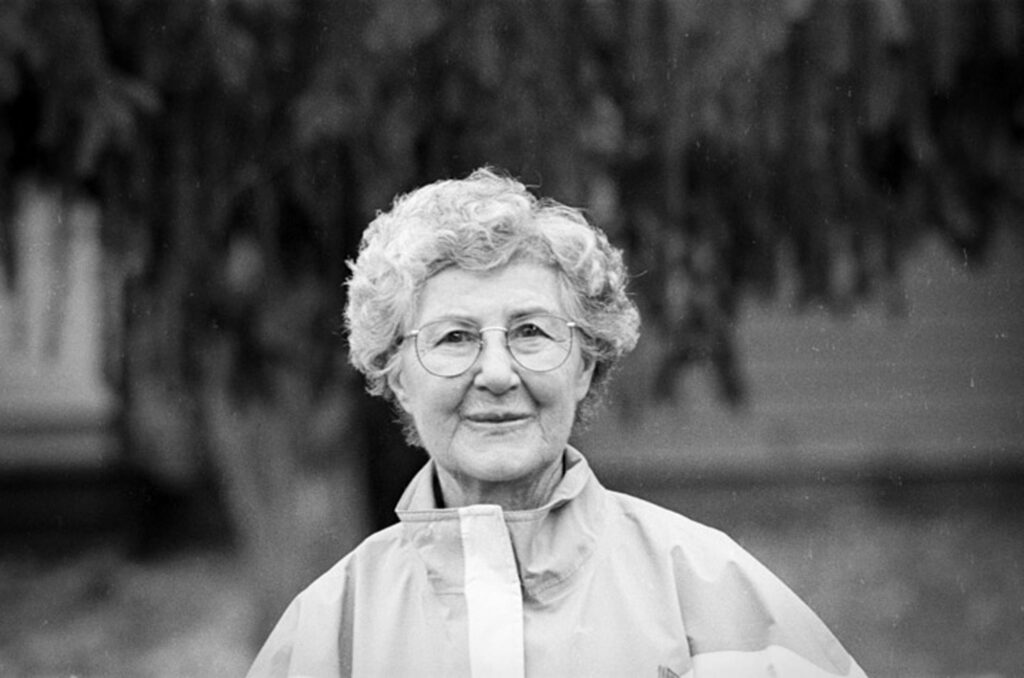
This story behind the shot is a little different than my status-quo. It is part story behind the shot and part remembrance. These images are part of a series I shot in high school for my black and white darkroom class. We had to choose a photographer, write a report on their work and try to replicate what they did to the best of our ability. I chose a press photographer from the 1930’s and 40’s named Arthur Fellig. He earned the nickname Weegee after the Ouiji board for his seemingly psychic ability to get to a crime scene before any other press. The truth of it; he was the first press photographer to have a permit to carry a police band-short wave radio. He also carried a portable darkroom in the trunk of his car to expedite his shot-to-print time. Because he worked in Manhattan during the 30’s and 40’s he dealt with a lot of mafia and violent crime. With two amazingly willing full blooded Italian grandparents at my disposal, I went to work. My grandfather-a former lawyer- agreed to have a fake gun pulled on him by my grandmother in front of city hall (before the days of terrorist worries). We staged a card game gone wrong with Alfred Hitchcock like techniques using chocolate syrup for blood. The project earned me an A and some great shots for the book of memories. This past week I lost my grandmother. She lived a full life of 95 years, was a major part of my life and accounts for a good amount of my personality. My love of cooking certainly comes from her (along with my inability to rest until I’m done washing the dishes after dinner). She was an incredibly caring and humble woman. Everyone in the family knew she was a lieutenant and nurse in the Navy in a time when women rarely rose through the ranks. What we didn’t know until recently was she was asked to represent the Navy during the induction of the United Nations in San Fransisco 1945. She didn’t even tell my mother about that. As one not to toot her own horn, who knows what other untold experiences she had. The effects she had on so many will continue to ripple outward and touch the lives others for a long time to come. You’ll be missed immensely! In Loving Memory of Yolanda Falcone January 31, 1919 – December 12, 2014
Woody’s World: The Origin Story
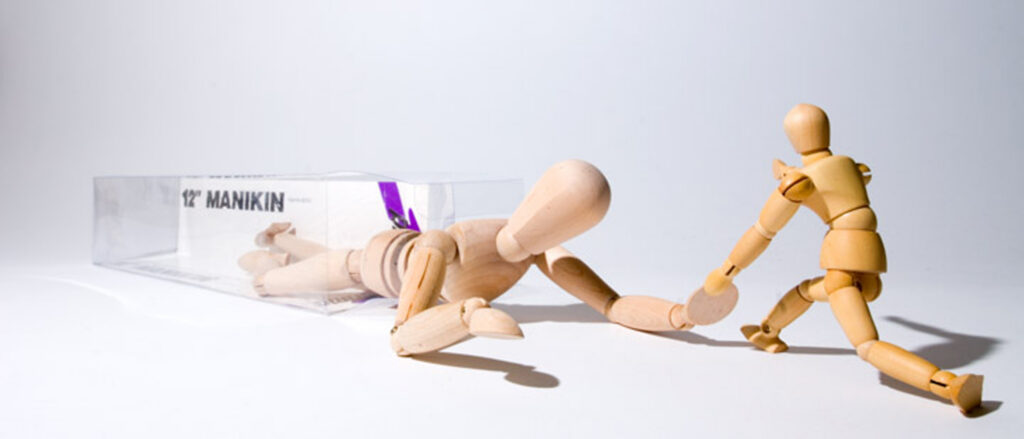
Everyone’s story has to start somewhere, and our friend Woody is no different. Luckily a new chum was around to help Woody out of his box!
The Story Behind the Shot: Swallow Feeding Its Young
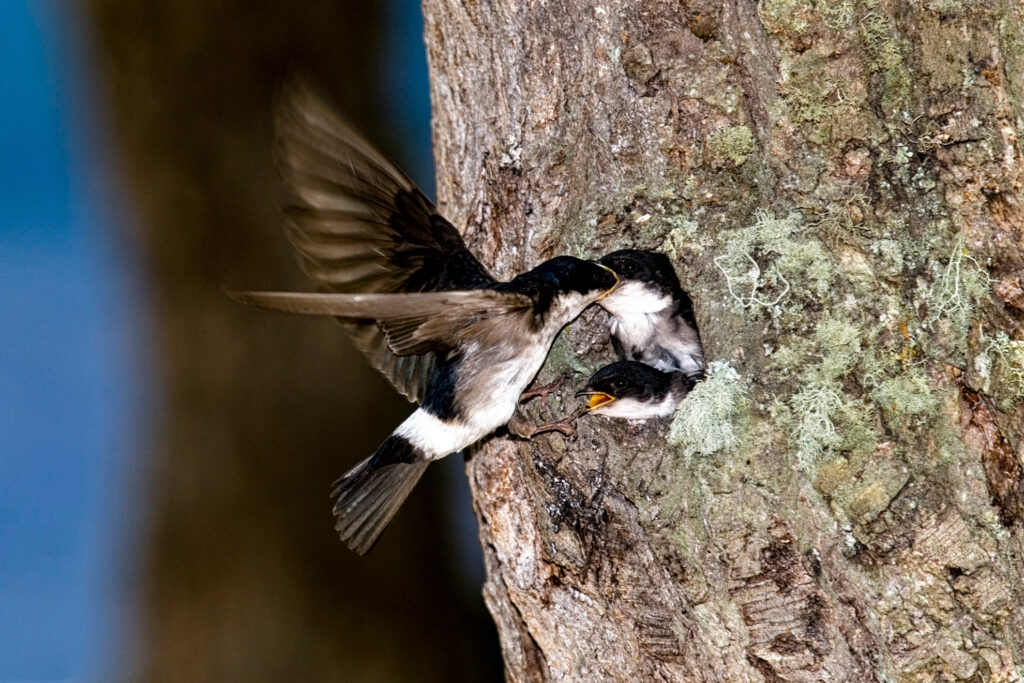
Patagonia – The First Time Around As long as I could remember I had always wanted to explore the mythical and magical region of Patagonia in Southern Argentina and Chile. I finally made my way there in early 2008 for three and a half months of crisscrossing these two countries from one side to the other. The first two weeks I had been traveling down the eastern coast of Argentina getting to see things like an odd welsh town in the middle of South America called Gaiman and one of the worlds smallest dolphin species known as the Commerson’s Dolphin which only grows to around 4-5 feet in length, just to name a few. One of the highlights on this trip was trekking for 5 days in Torres del Paine (TdP) National Park in Southern Chile. When people think of Patagonia, they often think of one of two mountains, the Torres (actually a set of 3 mountains in the Cordillera Paine Range) in TdP or they think of Fitz Roy in Argentina. What most people don’t actually know is that the vast region of Patagonia is mostly large empty grasslands known as Pampas. The mountains most people associate with the region are actually a very small part of it on a whole. The Trek I was trekking by myself – or as alone as you can be at a very busy national park with full campsites. There are no towns for a couple hours drive and the few stores they have along the trails are very expensive; $4 for a snickers bar expensive, so you want to carry everything you can. I was not only carrying my camera gear, but all of my backpacking gear and food for a week. I have lots of lightweight equipment so luckily this only came to about 80lbs. My total miles covered over the 5 days would be about 55-60 including small side hikes with the toughest ascent at the end to see the Torres. By putting this at the end I would have less weight in my bag for the climb because I will have eaten most of the food I was carrying. The first day of hiking you are following a thin piece of land between 10,000ft plus mountains directly to your right and a large imposing glacial lake to the left. This glacial lake along with the glacier near my camp for the night are called Lago Grey and Glacier Grey. After three hours on a bus, a thirty minute catamaran ride and now eight miles of hiking under my heavy pack, I was tired and hungry. To save weight in addition to power bars, beef jerky and nuts I was living mostly off of soups or other things I could just add boiling water to. I set my pot to boil and started to get my dehydrated noodle soup ready when I noticed a swallow circling around the camp a few times. I watched this for a moment and before too long it headed for the tree about 15ft to my left. Keeping my distance I moved over to change my vantage point and saw two baby swallows waiting for their meal. I quickly grabbed my camera and tripod along with a telephoto lens and went to locate somewhere to photograph this scene unfolding before me. This is always the wildlife photographers struggle when you are truly able to get close to your subject – where is that limit that is not going to harass the animal and change it’s behavior, but how close can you get to the action? Luckily these little guys lived in the middle of this busy campsite so they were very used to humans being around them. I watched the adult approach a couple times to get a feel for its flight path and I settled onto a stump about 12 feet from the tree the swallows called home. They seemed to not notice me from this distance and carried on with their normal feeding. I photographed the feedings for a for a few minutes until the fading light of sunset became too low. I made my way back over to my now boiled soup to reflect on my first day in what would become one of my favorite places in the world. I have been back to Chile – and more specifically the Torres del Panie region – multiple times now. With diverse and accessible wildlife and breathtaking landscapes around every corner, it is every nature photographers dream destination. The weather changes rapidly there, “Four seasons everyday,” is a saying around Patagonia. When you have weather that changes so quickly, you have mixing storms and sun that create incredibly dynamic images. No matter how many times you return, there is always something new for you to discover. On my second to last trip, then six years later, I returned to see if the little swallows still used that tree for a home. The park had changed the campgrounds to no longer sit on the shoreline and they were restoring that area of the grounds. You could still walk over to the tree though and the hole was clearly there, but the swallows had moved on. Later on in that trip though I did end up finding a few mountain lions to keep me busy, but that’s an entirely different story… These days I run a workshop to Chile that visits the Torres del Paine National Park and also visits The Atacama Desert in the far North of Chile. This gives me an opportunity to share a couple of my favorite places with a few people each year. If you’re interested in crossing one of the world’s premier bucket list destinations off your list, all while improving your photography, click here for more information.
The Story Behind the Shot: Columbia 2015
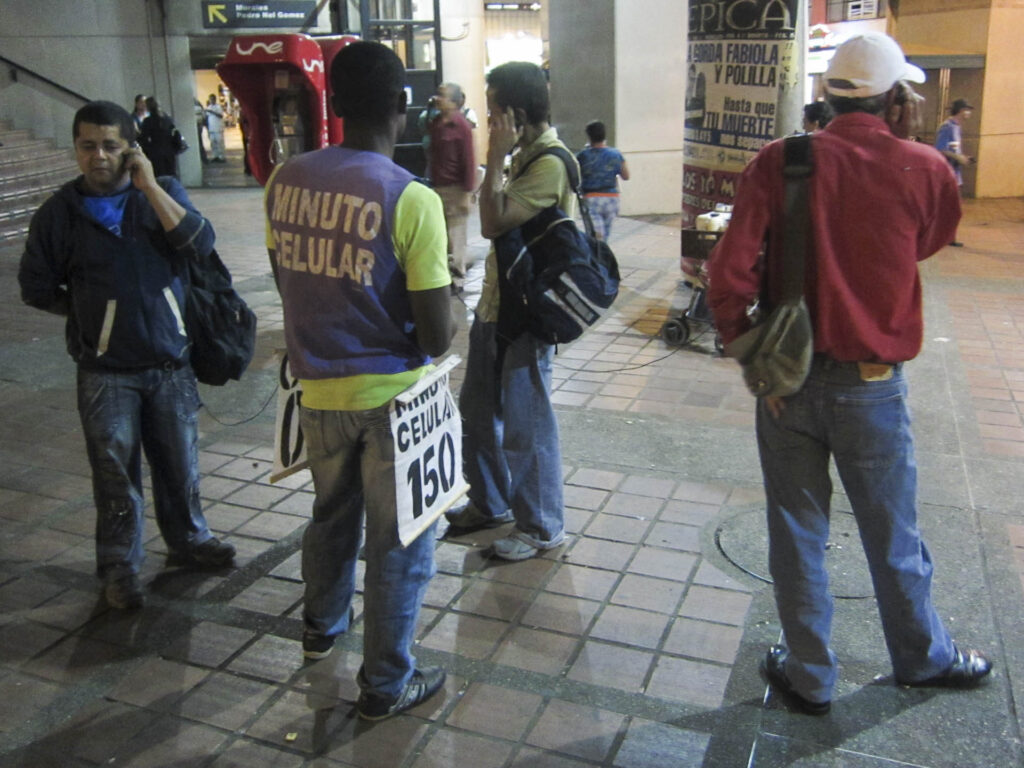
One of my favorite things about traveling to other countries is experiencing different cultures. It’s always interesting to see the differences and how they compare to what you are used to. Regardless of the wealth of the country these days, everyone seems to have a cell phone. I have been in areas deep in the middle of nowhere staying with tribes in bamboo huts that don’t even have a light in them, people in the village will undoubtedly have a cell phone. This specific picture was taken in Medellin, Colombia. In Colombia it is free to call people that use the same cellular company you do, but if you need to call someone on a different network, it gets very expensive. In true entrepreneurial spirit, people will purchase a phone from each company and then when you need to make an out of network call they charge you a small fee to use the phone within the network. I affectionately refer to this as the Colombian phone booth. Every city and region does this, but each area has their own ways of keeping track of their phones. In some areas they will have a little little table they sit at with drawers of phones. In some cities they will have a table with no drawers and strings attached to it so people can’t run off. Here we see my favorite version. In Medellin they will have 4 or 5 phones all attached to themselves by a cable as you see in the picture here.