
Chile 2016 in the Rear View Part 1: Patagonia
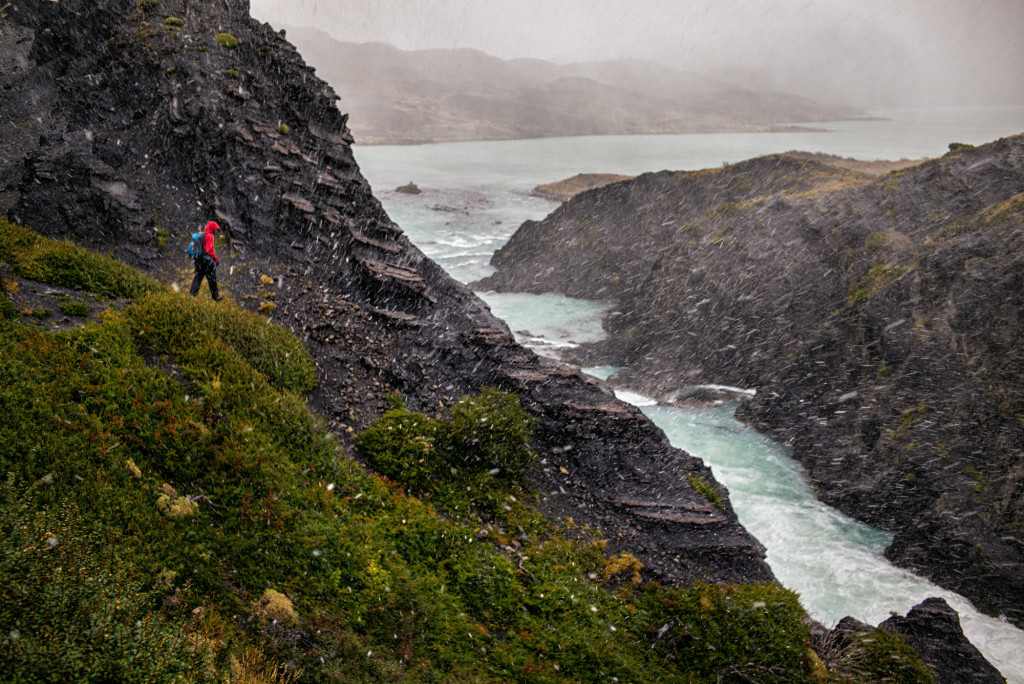
I’ve got to be honest, it’s has been pretty hard to sum up this trip. This was my third time roaming around this incredibly diverse country, but my first time bringing a photography workshop to see this amazing place. During our journey we were lucky enough to see every major animal in Torres del Paine National park and also were graced with some incredible sunrises and sets. The next morning, for our first sunrise the clouds had split and the winds had subsided to a paltry 40-50mph. This ended up bestowing a beautiful sunrise upon us. The winds create waves on the surreal opaque blue waters of Lago Pehoe that can reach multiple feet at times. A little later in the day we headed up into the hills to find some wildlife. One of the more prominent animals in the region is the Guanaco. They are in the camalid family like a llama or a camel and can be found roaming round most of Chile. On our third day we headed out on a boat trip through the icebergs in Lago Grey to approach Glacier Grey. The flat light of the day made the already blue ice of the glacier pop even more. On our way back to the hotel we were incredibly lucky and came across a pair of Huemuls (South Andean Deer). At one point in recent history there were as few as 350 huemuls left alive. Through rigorous efforts of the Argentinian and Chilean governments the population has rebounded to a still critically endangered number of roughly 2500. One of the more elusive animals in Patagonia is the mountain lion. I am lucky enough to know where a few different populations of mountain lions reside within Torres del Paine, so we set out on our last evening to try and capture some images of these amazing animals. After a while of scouring the hillsides without any luck we decided to head back to our waiting van before it got too dark. As we were heading back into civilization a mountain lion passed in our path within 150 ft allowing us to get some great images.
Mountain Goats Usually Win in a Game of King of the Hill
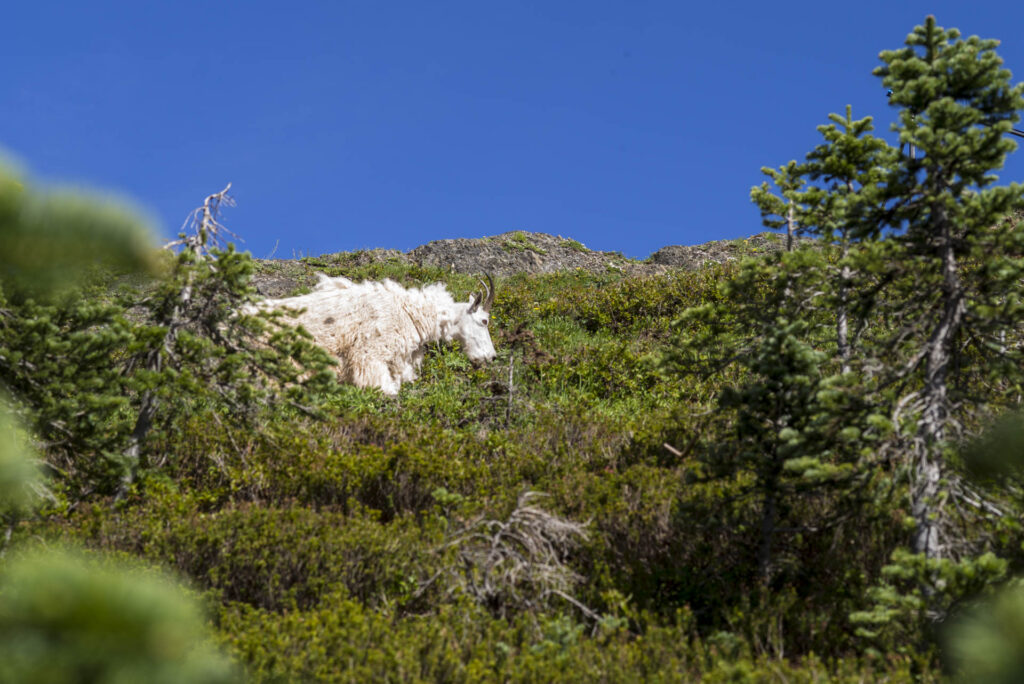
After wrapping up a trip to the amazing Washington Coast with a fellow photographer and a model, we decided to stop by Hurricane Ridge in the Olympic National Park. This National Park is high in the Olympic Range with sweeping views of the surrounding mountains, the salt water of The Strait of Juan de Fuca and the southern coastline of Vancouver Island in Canada. This is a place I have been to quite a few times and while my friends went off to explore and shoot on their own, I set off to a high viewpoint to film a time lapse of the clouds forming over a valley. This park is not only a beautiful alpine vista, but it’s home to black tail deer, black bear, mountain lions and mountains goats just to name a few. The first three are endemic to the area while the mountain goat, although endemic to the nearby cascade range, is an invasive species introduced to the Olympics in 1925 more or less for the novelty of having mountain goats there. Over the years, especially in the last decade or so there has been an increase in the population, and also an increase in the aggressiveness towards humans in the area from the goats. In 2010 a man was fatally gored by one while eating lunch on a hike in the Olympics. He was able to get his hiking companions out of danger and tried to wave the goat away. The goat speared him in the thigh, severing his femoral artery and then it stood over the man until he bled out. One of my greatest passions is wildlife photography and I have encountered mountain goats in the wild before in a few different areas. When photographing any animal, whether it be a chipmunk or a rhino, you want to respect the animal and give it space. Once the demeanor of the animal changes, it’s too late. It feels harassed and even if it doesn’t run away it’s now on guard and you won’t be getting any natural looking uninterrupted images. This is also the threshold where you can get yourself into some serious trouble. It is important to research the behaviors of animals a bit before you put yourself in a situation with a large or dangerous animal. That way you can hopefully get a feel for when things are about to go bad. That being said, not every animal is easy to decipher. Some animals are very obvious in their intentions while others can become aggressive at the drop of a hat. As humans we tend to anthropomorphize and project our feelings on animals. The only way to truly get a feel for an animals behavior is to spend time in the field observing your subject. For evidence of this look no further than the string of attacks recently in the news of people getting too close to animals at Yellowstone or trying to take selfies with dangerous animals. Two people were killed recently while trying to take a selfie with a wild walrus. A walrus, I mean come on, that is Darwinism ladies and gentleman! Let’s get back to the matter at hand here. The time lapse that I intended to take was going to be 720 images over the course of an hour. That equates to an image every 5 seconds. I use a Dynamic Perceptions Stage One rail system to move the camera between frames and it also triggers the camera for me. I had this traveling across 80 inches of rail over the course of the hour. After setting it up I headed about thirty feet away to sit in the shade and enjoy the beautiful views while my time lapse was being shot. Over the course of the next half hour I answered the standard questions people have as they walk by and see an elaborate camera set up that if foreign to them like, “What is that thing, a professional selfie stick?” Yes, two separate people more than twenty minutes apart asked that. Just about half way through my time lapse a hiker that I had just seen a couple minutes before head up a trail was returning back down my way. He approached me and said, “There’s a large aggressive mountain goat up there herding people off the trail and he’s heading this way. Can you tell people so they don’t go up there?” I wasn’t planning on going anywhere for another half hour or so, so I gladly accepted the responsibility of trail supervisor. About a minute later I caught site of the goat and he certainly was a big one! He was still about a quarter mile away so I watched from my shaded perch as he weaved in and out of the tree line. A moment later I saw another adult followed by a kid. Now this started to make sense. The large male was clearing the way for the babies that were following behind. Sure enough a moment after that a third adult followed by a second kid joined the group. As I watched them congregate still in the distance I did have to thwart the efforts of a few intrepid hikers that wanted to keep on their intended path. With about ten minutes left on the time lapse the big male started to head down my way. A couple from the UK that were traveling through the states had joined me as we watched the large animal slowly make its way towards us. When he started to get a couple hundred yards away it became fairly evident that my camera gear was going to be along his path or at least closer than I wanted it to be. I went up and grabbed the camera off the time lapse rig so if he bucked it off of the 500ft cliff it was perched over, at least I’d still have my camera. When I looked back he had closed off my