The Story Behind the Shot: Nepal 2014
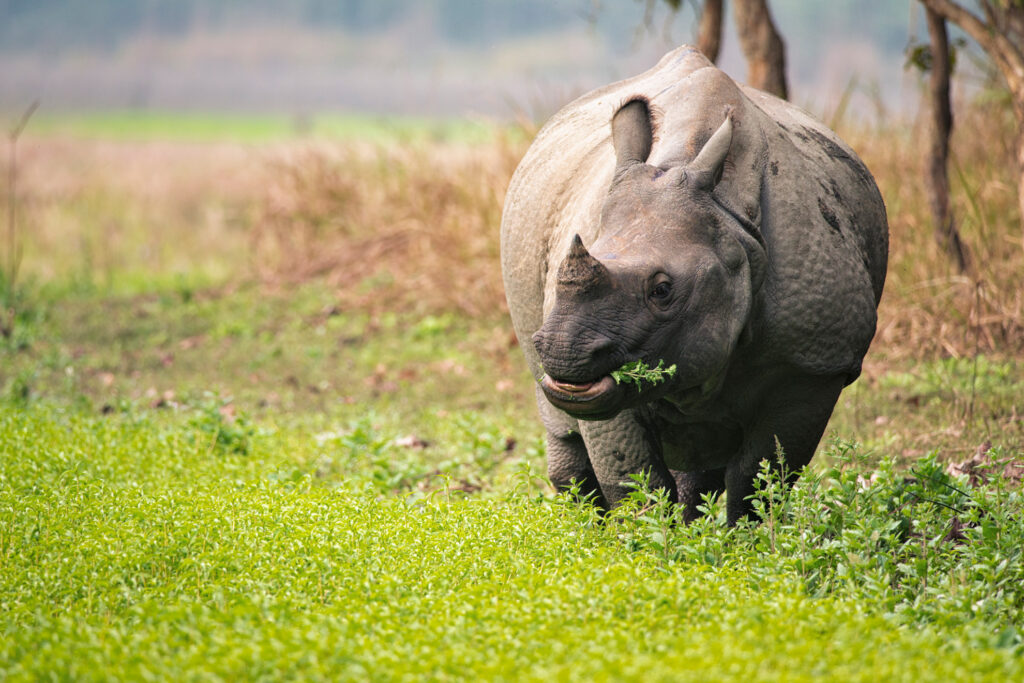
This past winter my buddy Jordan and I went to Nepal for the standard reasons, mostly trekking in the Himalayas. I had been to Nepal once before and have a network of friends and guides there. This was Jordan’s first time out of North America. Long story short, Jordan ended up getting very sick our first week there and we had to shelf our trekking plans. Nepal ranges from it’s lowlands at 194ft (60m) to the top of Mt Everest at 29,029ft (8848m) above sea level. Because of this you have almost any climate a land locked country can offer. One of my favorite regions in Nepal are it’s jungles. We’re not talking about dense canopy jungles like the amazon with over 100F (38c) days plus unbearable humidity. Nepal’s jungles are closer to 90F (33c), but a much more comfortable heat. Jordan and I went on a 25 mile (40km) bike ride with a guide I know named Ravi and his friend to do some wildlife shooting in the area. Nepal has the second highest amount of migratory birds in the world passing through it and is home to mega fauna like crocodiles, tigers and one horned (Indian) rhinoceros. We had old rickety single speed bikes, and lets just say Nepal does not have the smoothest roads. The few paved places are cratered with potholes. We eventually made our way into a buffer zone. A buffer zone is an area designated by the government of Nepal around national parks to minimize negative effects on animals and maximize the use of the surrounding resources. After riding for a bit we passed a few jeeps with tourists who were also out looking for wildlife. The fourth one that passed stopped to talk to Ravi. He came over to inform us that they spotted a rhino about a half mile up in a field off the side of the road, and wanted to know if we wanted to leave the road and get close? Of course we did! We made our way into the clearing by crossing a creek where Ravi pointed out a fresh tiger track in the mud making sure to tell us it was the largest he’d seen in the area. The rhino was about a quarter mile (.4km) into a clearing. We slowly approached, but stayed close to the treeline. Although a female one horned rhino can reach 3500lbs (1600kg) they can run at speeds up to 35mph (50 km/h). As Jordan and I clicked away inching closer, Ravi kept an eye trained on our subject to make sure she wasn’t about to charge. Rhinos have terrible eyesight, so she didn’t really take notice of us until we were about 50ft (15m) away. Have I mentioned yet that this was Jordan’s first time ever shooting wildlife? We inched in a bit more (maybe 40ft away) until she slowly started to come towards us. At this point Ravi told us to slowly start walking backwards toward the encroaching forest. She proceeded to slowly herd us around for about five minutes through the forest, during which we continued shooting. When it looked like she was taking too much of an interest in us Ravi threw a stick far out behind her to divert her attention while the three of us slowly made our way to a safer distance. After a collective sigh of relief Jordan looked at me almost shaking from the adrenaline coursing through his veins, “That was amazing!” was the only comment he could muster at the time. We made our way back to the road where Ravi’s friend had been watching our worn bikes and started the grueling return trip to the village. Despite the bone-shaking ride we were happy to come away with our lives and some great images to boot!
Night in Death Valley – A Reflection
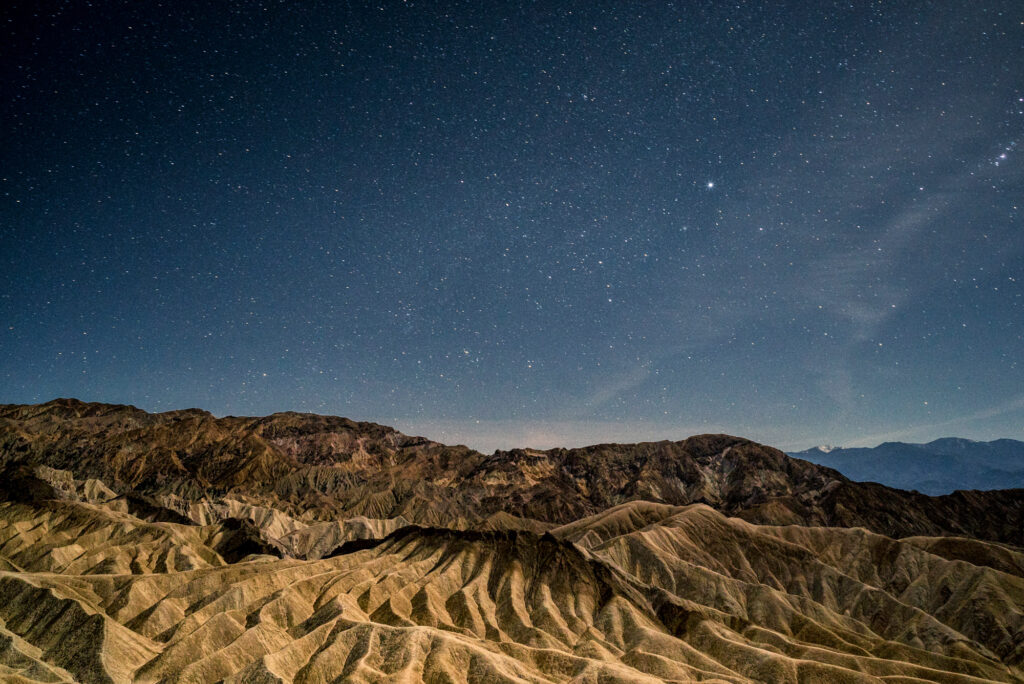
Last week I wrapped up my annual Death Valley workshop. Even though this workshop mostly deals with night photography, we do still get out for a bit during the daylight. This year we were lucky enough to have the workshop fall on the tail end of one of the largest super blooms in a century at Death Valley. Despite being one of the driest places on the planet, when rains come through at the right time in the late winter it can trigger dormant wildflower seeds to start to germinate. Regardless of the year, you can almost always find a random wildflower on the valley floor during spring. This year the whole floor was carpeted with blooms. Whether the park is carpeted in flowers or not, Death Valley is still one of my favorite national parks. I have been traveling there for 7 years now in the spring and still have seen less than half of this vast expanse. The area was mostly used for mining of borax and silver (although there was more spent on silver mining than made here). Once the mining boom started to fizzle out around 1915 companies were pulling out or going bust by staying. Pacific Coast Borax turned it’s crew headquarters into the luxury hotel, now known as The Furnace Creek Inn, which started the tourism boom to this desolate area. In 1933 President Herbert Hoover pronounced almost 2 million acres as a National Monument. It wasn’t until Halloween 1994 that another 1.3 million acres was added and the area was designated a National Park. No matter how many times I have been, there is always something to explore or photograph at Death Valley. There is no doubt in my mind that I will continue to return and explore this amazing landscape. I think I’ll keep my visits to the spring and summer though to avoid those 120f degree temperatures!
Chile 2016 in the Rear View Part 1: Patagonia
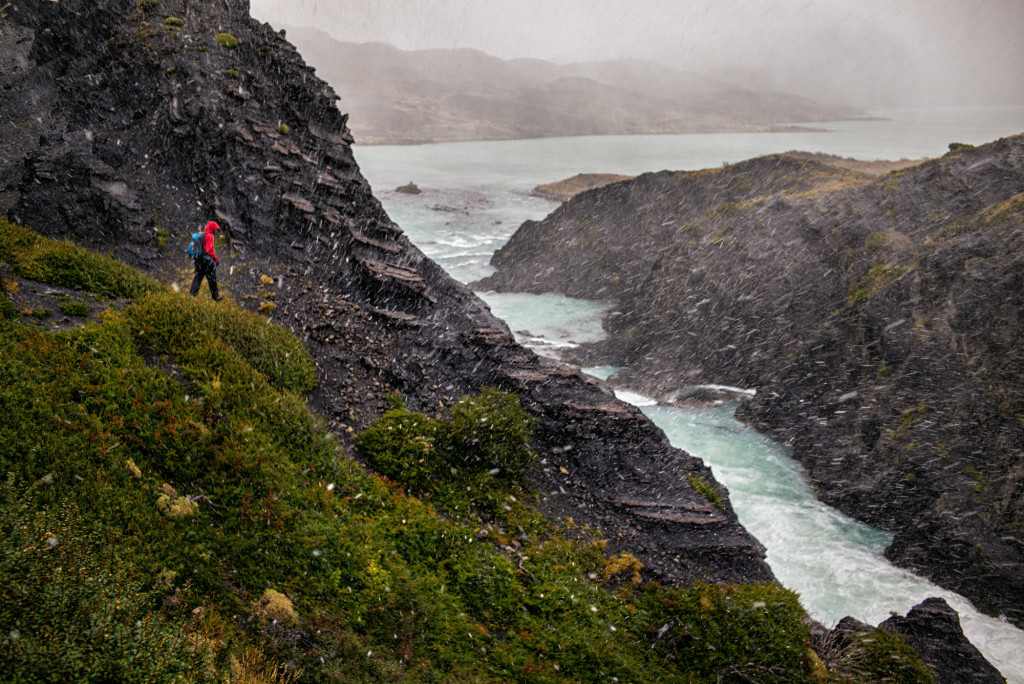
I’ve got to be honest, it’s has been pretty hard to sum up this trip. This was my third time roaming around this incredibly diverse country, but my first time bringing a photography workshop to see this amazing place. During our journey we were lucky enough to see every major animal in Torres del Paine National park and also were graced with some incredible sunrises and sets. The next morning, for our first sunrise the clouds had split and the winds had subsided to a paltry 40-50mph. This ended up bestowing a beautiful sunrise upon us. The winds create waves on the surreal opaque blue waters of Lago Pehoe that can reach multiple feet at times. A little later in the day we headed up into the hills to find some wildlife. One of the more prominent animals in the region is the Guanaco. They are in the camalid family like a llama or a camel and can be found roaming round most of Chile. On our third day we headed out on a boat trip through the icebergs in Lago Grey to approach Glacier Grey. The flat light of the day made the already blue ice of the glacier pop even more. On our way back to the hotel we were incredibly lucky and came across a pair of Huemuls (South Andean Deer). At one point in recent history there were as few as 350 huemuls left alive. Through rigorous efforts of the Argentinian and Chilean governments the population has rebounded to a still critically endangered number of roughly 2500. One of the more elusive animals in Patagonia is the mountain lion. I am lucky enough to know where a few different populations of mountain lions reside within Torres del Paine, so we set out on our last evening to try and capture some images of these amazing animals. After a while of scouring the hillsides without any luck we decided to head back to our waiting van before it got too dark. As we were heading back into civilization a mountain lion passed in our path within 150 ft allowing us to get some great images.
Chile 2016 in the Rear View Part 2: Easter Island (Rapa Nui)
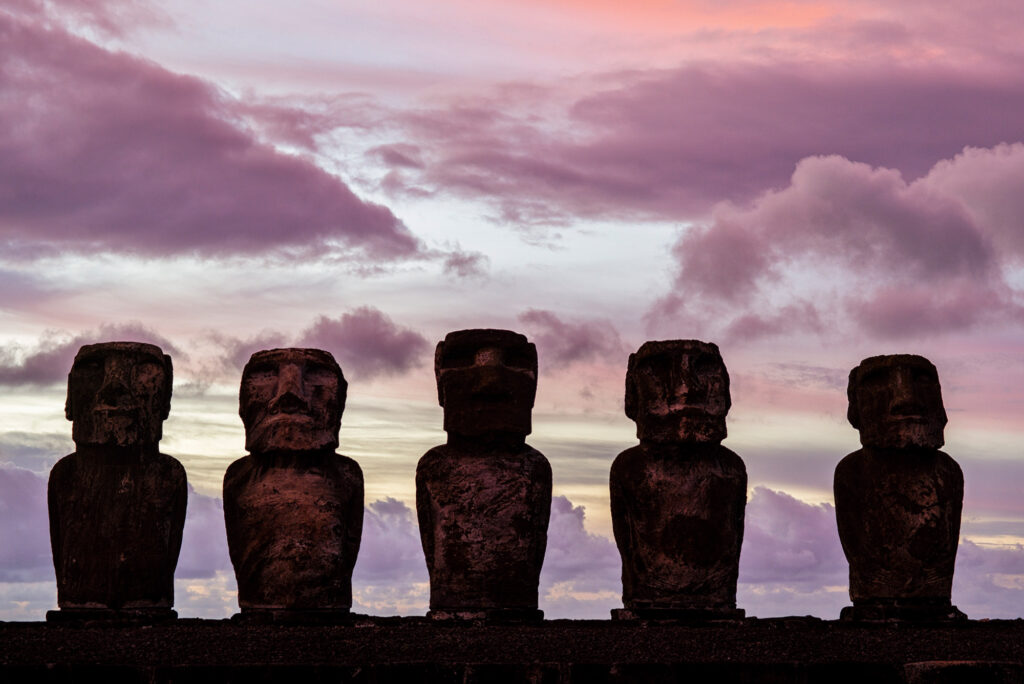
Few places on this vast planet still evoke the mystery of Easter Island (Rapa Nui). There are so many conflicting theories on the statues whose presence overlook the landscapes of the furthest inhabited island in the middle of the pacific, we may never know the truth behind the civilization that lived on this island. Despite all of my travels, this was the first time I made my way to this amazing destination, and I was lucky enough to be able to lead the second part of my Chile workshop there. Being a volcanic island, Easter Island has a vast network of caves and lava tubes. Some of these caves were used at different periods as homes by the ancient inhabitants of the island. You can still see petroglyphs and cave paintings in some areas. The stone used for the different parts of the Maoi was sourced from different places on the island. Most of the statue is made of a solidified volcanic ash. The reddish stone seen on the heads of Moai (known as Pukaus) once they are on their final platforms was carved from a different stone and were meant to symbolize a top knot of hair. Yes, an ancient Man-Bun. (Sorry hipsters, not as original as you thought!)
A Look Back – Death Valley Workshop March 2017
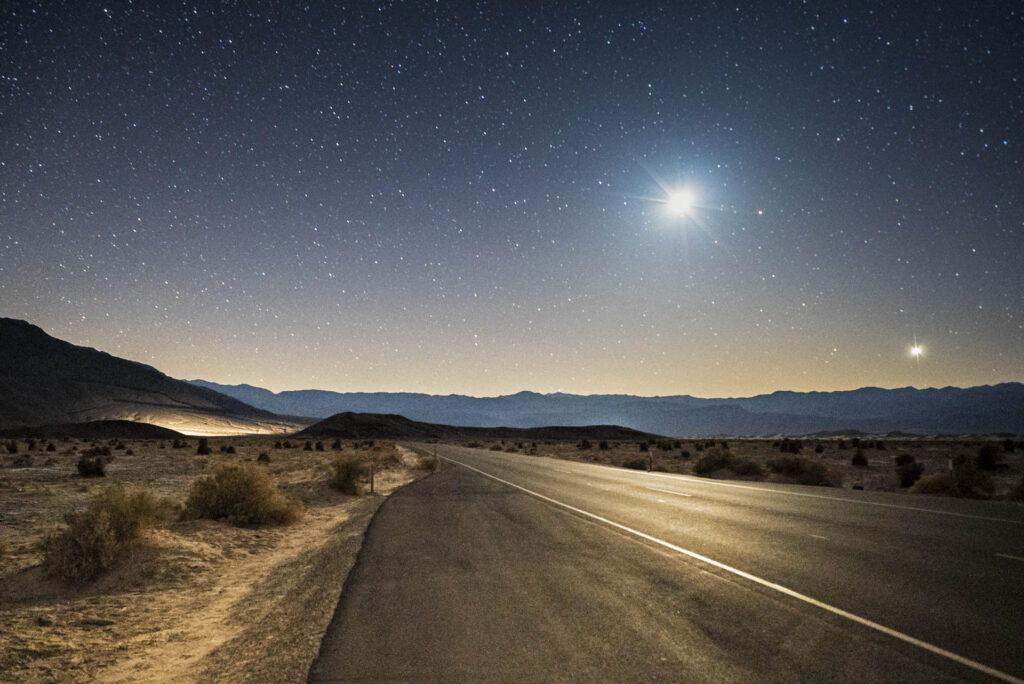
I’ve been lucky enough to have spent the better part of the last two weeks in Death Valley. A little more than the first week was for my annual Night Photography Workshop in Death Valley. I’m pretty sure this is the last year I will be running this trip in the spring. I am thinking about switching to the autumn season and moving the focus to more of the milky way and although it is still fairly hot, September is the best time of year for that in 2018. Last year this workshop fell on the tail end of the largest super bloom Death Valley has seen in decades. This year we ended up with nights that clouded up early on us and violent sandstorms. Never fear though, there is always a way to harness the powers of photography! Were there is dynamic weather, there are dynamic images. We were able to get out and shoot the first couple of nights. The clouds certainly tried their hardest, but we were able to come away with some great images none the less. The image to the right was taken on the first night. I love the symmetry between the clouds above and the salt pan below in a positive/negative or black/white relationship. Normally we head to the charcoal kilns high up in the mountains for the first night, but there was still ice on the last couple miles of road as we arrived in the park. The participant that took this image was able to safely make it to the kilns just a few days later. You can plan for the best likelihood of good weather and conditions but Mother Nature is one thing you can’t really count on to behave as she did before. The last night of shooting we weren’t able to get out at night because of high winds. It’s very difficult to take a sharp image on a tripod in 40-60mph winds. We did however head up in altitude above the sandstorm for sunset to take advantage of this rare spectacle that we were lucky enough to witness. After the daylight faded we headed inside for a class on night photography and a general question and answer session. Despite the weather not exactly cooperating for a night photography workshop in the way you’d want, everyone was very open to switching game plans on the fly to take advantage of the changing conditions in the park. After all, you aren’t always dealt the hand you want. It’s what you make of it that matters. Below you can see a few more images from the workshop.
A Look Back – Waterfalls of the Columbia River Gorge 2017
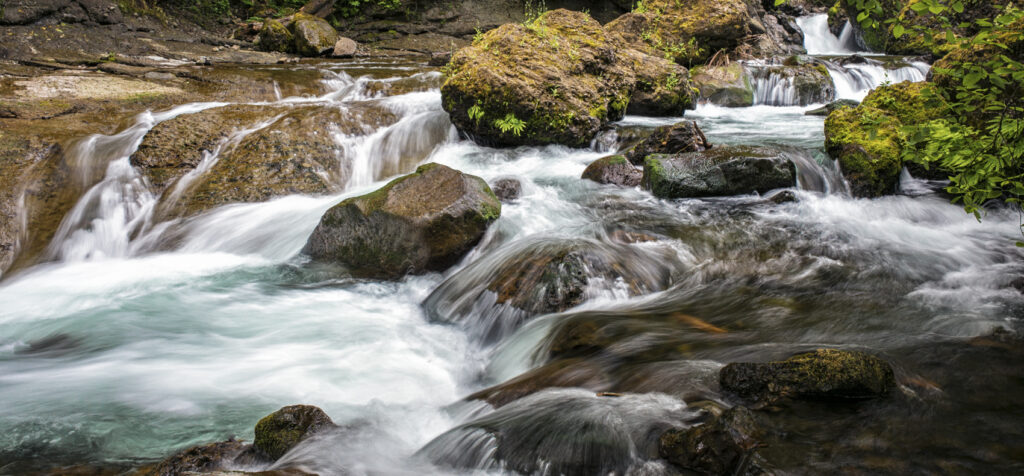
People, Places and Pictures There are few settings I’d rather be in during late spring than in the Columbia River Gorge photographing waterfalls. Even better is when I get to share some of my favorite cascades with a few people and help them grow in their photography along the way. This past week I have been lucky enough to do just that; be immersed in the lush green mossy gorges and steep basalt cliffs of the river gorge with a great group of photographers! A Little Adventure With Your Pics? For this years trip into the Gorge we were bestowed with perfect waterfall photographing weather both days. On the first day we not only had a 2 mile round trip hike to get to our introductory falls, but an adventurous decent to our second location. It is a lot scarier looking than the actual decent! Everyone did a great job making their way to our shooting locations. On the second day we hiked 2 miles to our final falls of the trip on a truly northwest trail. Steep cliffs lined with tall moss covered old growths make you feel so small in the landscape. When you make it to the falls, it is hard to not get in the crystal green water, despite the fact it is only a few degrees above freezing. A Dream Come True There is nothing like hands on learning in breathtaking locations. I still have a hard time believing that helping people improve their art form in some of the most beautiful places in the world is my job! I hope to be able to share these incredible places with more of you in the near future and help more people see what’s possible with their photography.
Moab by Night (mostly) 2017
A Look Back
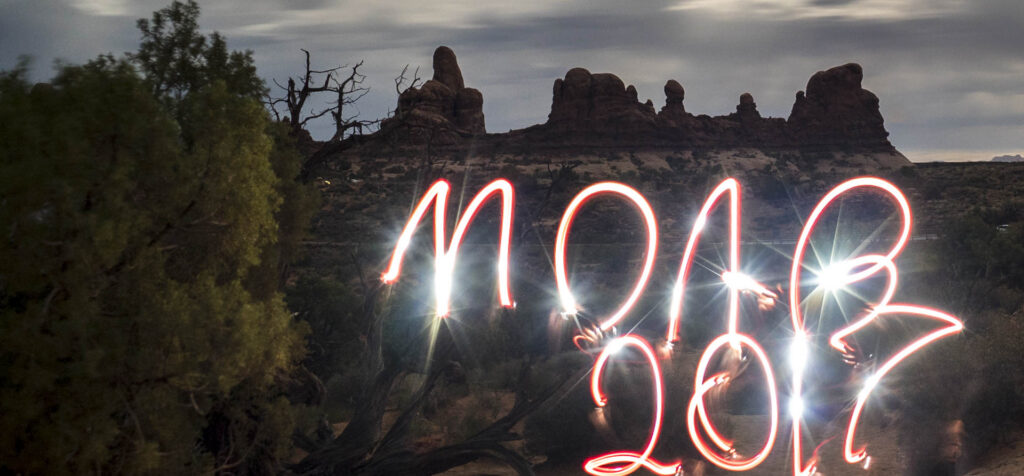
One For The History Books This was the last year of the Moab by Night (mostly) workshop. It pains me to say these words since this is one of my favorite regions in the US, but with the permitting changes taking place for the national parks in the region, it is not a viable workshop to offer at an affordable price anymore. That being said, I am working on another Utah workshop for 2019. Utah is a state that leaves me in continual awe of its natural beauty and I love being able to show it to people in a way that they have never seen it before. Mother Nature Let Us Have A Little Fun Anytime you are organizing or participating in a photography workshop, the weather is something that you can’t really predict. There is extensive research before deciding on a location for a workshop, including its weather history, to try and find the best odds of us getting the shots we are hoping for. I have had whole workshop ideas for amazing locations or celestial events scrapped by a high likelihood of rain, clouds or other unfavorable weather during that time of year. There is nothing worse than going on a once in a lifetime photographic trip and having light rain with flat steely skies the entire time you are there. For example, for a Northern Lights Workshop I wanted a location that still had quite a bit to offer in case of cloudy weather. Most places that you are going to hopefully see the Northern Lights tend to be in areas prone to clouds that time of year. After searching for a few years I landed on Lofoten Islands in Norway for this very reason. With immense fjords exploding out of the Norwegian Sea’s green-blue waters, even in the rain there are lots of photographic opportunities guaranteed not to disappoint. With mostly cloudy weather predictions for the entirety of the 2017 Moab workshop I was certainly a little worried. Day One Luckily, despite the forecasts we ended up with some great conditions for the majority of the trip. Our first night we headed just outside of the town of Moab to explore the Castle Valley. With immense sandstone formations and canyons cutting into the valley from all angles, it is worth the short trip out of town. We started out by getting the basics down of how to find your focus and exposure at night. Especially with an auto focus lens, this can be a frustrating experience. Once everyone started getting the techniques down a bit there were some great images coming out. After a few hours of shooting we headed back for a well earned night of sleep. Day Two After a morning Lightroom session and a short break we headed into Canyonlands National Park to explore a bit while the sun was still up. This is a huge park divided into three section; Needles, The Maze and The Island in the Sky. We would only be visiting a small part of The Island in the Sky while we were there, but that is more than most visitors to this part of the country will ever see. After taking a few shots at Grand View Overlook, we headed to the Green River Overlook to use some graduated neutral density filters to capture the setting sun. After the sunset we headed to the parking lot for a bit of dinner and to wait for the light to fully leave the sky. This night turned out to be almost cloudless giving us a great opportunity to photograph Canyonlands with no one else around. Day Three We start out with a break on day three for everyone to explore the town a bit and take in Moab in their own way. We had heavy storms roll through during the late morning that turned the desert town of Moab and its surrounding areas into wild torrents. Places where 300-400ft tall parched sandstone cliffs stood moments before were now replaced by raging waterfalls. The rains subsided before we headed into Arches National Park for the sunset and the last night of shooting. We were left with mostly cloudy skies for a little while with a heavy rain storm that passed directly over us right at sunset. We took the opportunity to eat a little dinner and after the rains passed we were able to get a little over an hour of shooting in before the clouds choked out the moonlight and the skies took on a blank steely look. To round out the night, we headed back to the meeting room for a brief painting with light session. Adam Lenk was helping out on this trip and he graciously struck a couple of poses for the cause. Day 4 On our last day we take time to reflect and give thanks to those that…oh wait, wrong day. We did however head back into the classroom for one last session in Lightroom. Everyone brings in a few images that they were proud of from the trip to share with the group. These are DNG files so I can see what has been done in Lightroom to edit the images and then I can make suggestions to help refine the editing process if any are needed. When it comes to a workshop, of course the location, time and technique used in the field are important. The editing process is the final step in image creation. This is when you take the picture you worked so hard to capture in the field and shape it into your image that you will be proud of for years to come. I feel that these edit and critique session are just as crucial to the learning process as what you do before the shutter clicks. In the future you can see images here from this trip as people submit them along with images from past workshops that you can see right
Chile 2018 – A Workshop Review
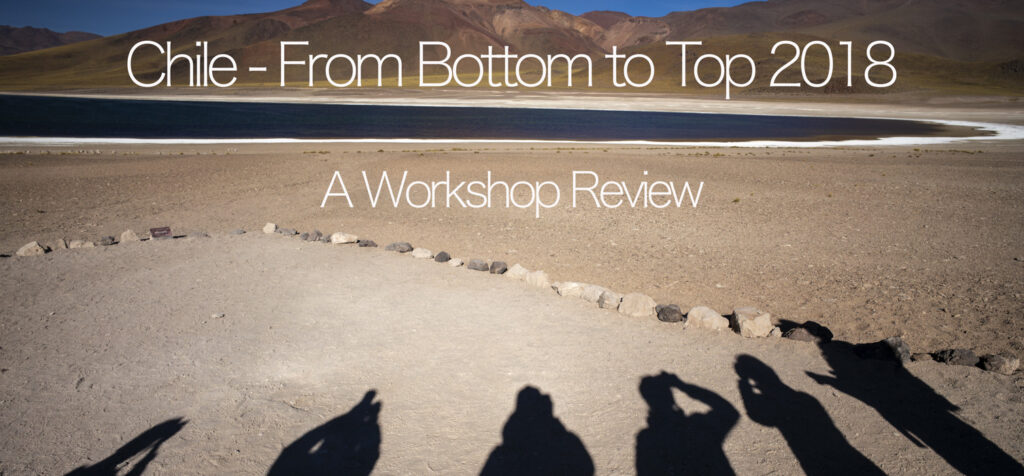
When Plans Change This year the Chile workshop didn’t exactly go as planned. Twenty-one hours before I was to leave to meet the participants in Patagonia, my flight was canceled due to a strike with LATAM Airlines. Because of this, I wasn’t able to make the first half of the workshop in Patagonia. I emailed the participants the classes we would have had the first day, and did what I could remotely but I wasn’t able to meet them until the second half of the workshop in the Atacama Desert. You can see more about the rerouting and almost 60 hours of travel that was necessary to meet the group in this video. Luckily I work with a great hotel for this trip and have guides and vans set up so they could still continue as closely as possible to the original plan in my absence. Finally Together I arrived at the hotel in the Atacama a day before the group, just in case there were any delays in my travel plans. With no more hiccups to speak of on that leg of the journey, it gave me a day to relax and prepare for the group to arrive. Luckily everyone was very understanding of the circumstances and had an immensely enjoyable time in Patagonia. Now that we were reunited though, it was time to put the pedal to the metal to make up for the in field education they missed out on in my absence. During our first sunrise shoot together, we broke out the Grad ND filters and started to create some images. After returning to the hotel for an enjoyable lunch we headed to the large salt flats that make up a lot of the valley we were in and more specifically to a place known as Laguna Chaxa. Despite being the time of year when most of the flamingos migrate elsewhere, there are always a few that stick around for some surreal images. When you have a bird that is that vivid placed in front of countless volcanic peaks, there are always images to be made. The next morning we headed out for a leisurely horseback ride through the 20 million-year-old rocky sand dunes near the Moon Valley. I am certainly not a skilled horseback rider. Luckily the hotel I work with has amazing horses and top trainers, so even for me with a skill level approaching non-existent, a ride with them is pleasant and safe. In both, Patagonia and the Atacama, we have rides that take us into areas that we otherwise wouldn’t be able to experience. Later that day we headed back to the Moon Valley for a hike through the interior. This is one of those places with huge landscapes that seem to go on for days. Coincidentally, NASA actually tests their rovers here because it is closest to the conditions found on the moon. When we returned to the hotel there was a Quincho about to happen. This is a traditional split lamb BBQ where traditional dancers perform. Although the lamb roast is the main attraction, there is plenty of other food on hand. The next morning was another sunrise. This time though we had about an hour and a half drive to our destination, El Tatio Geyser Plain. A good opportunity to continue sleeping in the van on the way. This is the world’s highest geyser system sitting at over 13,000ft. Because the Atacama is the driest place on earth with an evaporation rate 50x greater than Death Valley, the steam only rises until just after the sunrise. After a quick breakfast and some coffee, we continued on to photograph some of the surprisingly abundant wildlife in the region. After putting some clicks on our shutters we headed for a relaxing soak in some hot springs and a nice lunch. To finish out the day, we headed back to the hotel for an edit and critique session in Lightroom followed by a tour of the night sky at the hotel’s private observatory. Because of the unique conditions created here and the incredibly dark skies, almost 70% of the world’s observatories are in the Atacama. After a late night and an almost non-stop schedule, it was time for a long overdue day of sleeping in. After lunch, we all hopped into the van and headed to around 14,000ft to the Altiplano Lakes. These high altitude lakes are always beautiful. On the way back to the hotel we were treated to a South American Grey Fox focused on capturing a rodent. One of the participants got a sequence of him lunging into the air to pounce on his narrowly escaping prey. Unfortunately, Time To Go Despite the unexpected start to this workshop, it was an amazing experience for all. If you would like to join next years workshop, it will be from April 21- May 1st, 2019. You can click here for more information. As I type this, I am on my way to Machu Pichu and the Sacred Valley to scout out and add an optional extension for next years trip. Hope to see you there!
In The Rear View – Oregon Coast Workshop 2018
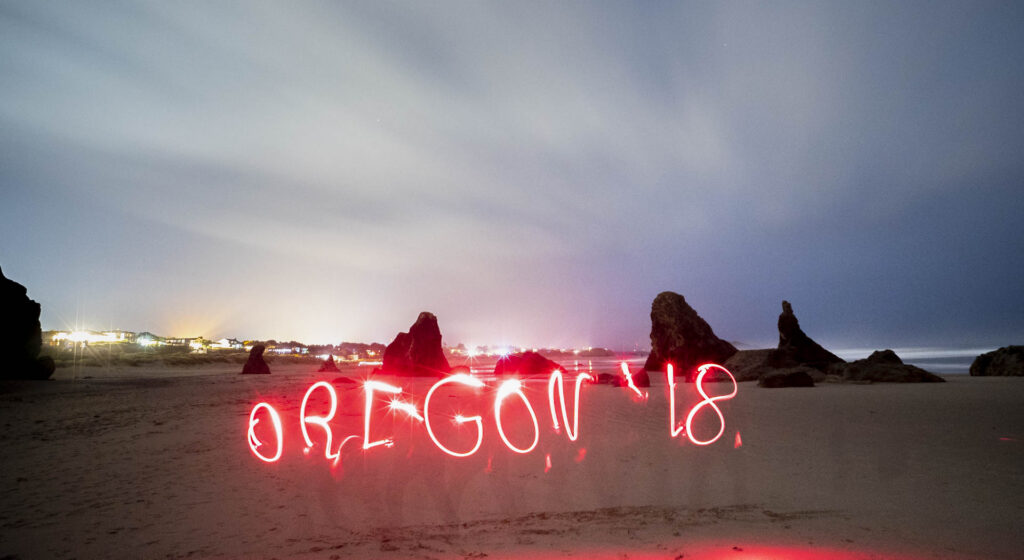
“To know ahead of time what you’re looking for means that you’re then only photographing your own preconceptions, which is very limiting and often false” – Dorthea Lange Whether The Weather Will Win? Occasionally when people come into a workshop or anything they are about to photograph for that matter, they come in with a preconception of what they want, and they are only looking for ways to realize that vision. Photography, and especially landscape photography change day by day, hour by hour and even minute by minute. The lighting, weather, time of year, tide, celestial phases along with a whole host of other things will influence your imagery. If you show up to an iconic location that you have spent a lot of time and money to get to and you have a storm rolling through instead of the multicolored sunset you had seen in your favorite photo mag, most people would end up disappointed and head back to the hotel to check the score of the game. The thing is though, there is always something to photograph. If you had an expectation of sun-kissed sand dunes and end up with a sandstorm, there is an opportunity there to create an image that is different than what everybody else has photographed. As someone that leads photography workshops for a living, this is something I am faced with on a continual basis. This is not a complaint, believe me! I love getting people to look at a scene in a different way than they are used to. Last year during the annual Death Valley workshop, we ended up having sandstorms that socked us in for the majority of the week. Sure, there weren’t as many moonlit landscapes as we had hoped for, but there were some one-of-a-kind images that are very different than the standard blue sky and a sand dune shot everyone else has from Death Valley. You just have to be open to the experiences that you are faced with and adapt your game plan to work within those parameters. In last year’s Moab workshop there were everpresent rain clouds that threatened us at every corner. In both cases, there were some stunning images created that were very different than what people originally expected. People came away with 3ooft waterfalls during flash floods that weren’t there minutes before and that would disappear within hours. If you click on either of the links above, you can see the images in the look back to those workshops. This Year’s Oregon Trip This was the maiden trip for the workshop, The Oregon Coast – Just A Little From The Middle. We had one previous LSJ workshop participant, but as for everyone else, this was their first time around. The group was really great and there was a comradery between everyone right off the bat. The Oregon coast is known for its cool grey weather, and the status quo was certainly in place for our first evening of shooting. Luckily, just as the sun was setting, the clouds parted enough to light the sky up in dramatic pinks and oranges. The next morning the fog and marine layer looked like they were trying their hardest to burn off for us, but it never happened. The cloudy Oregon coast had come with its steely best. Never the less, this posed a great opportunity to play in black and white. When you are photographing in black and white, you are looking at things differently than you would in color. Instead of looking at how the greens play off the pinks in an image, you are looking at how the light green sits next to the dark green with an even lighter green border around it. The darks and lights make up the tones that are the subject matter for B&W photography. We set out for the day with the hopes of the fog parting, but with black and white on the brain. For many of the participants, it was their first time really delving into B&W photography. For the next two days as we played between Yachats, the Oregon Dunes, and Bandon, B&W was the main focus. I don’t get to shoot a lot during workshops because I am helping people with their photography, but here are a few of the B&W shots I was able to get off in between. The Cloudy Grip Releases (Sort Of) On our last shooting day, we started off with a trip to the lighthouse just outside of town and a wander through old town Bandon. After lunch, everyone had a one on one session with Lightroom to help with a couple of the images that they had captured so far and then we got ready for our last evening of shooting. All day the sky had looked like it was clearing and by the time sunset was rolling around, like the first night, it was mostly cloudy, but some colors worked their way through. By the time the moon took over, the sky was clear enough to continue with a little night shooting. We didn’t have too long though before the smoke from nearby fires covered the light of the moon. You can check out images from the participants in the Student Gallery here. I will be adding them as they send them in, so make sure to check back to see what they have done!
In The Rear View: Death Valley By Night (mostly) 2018
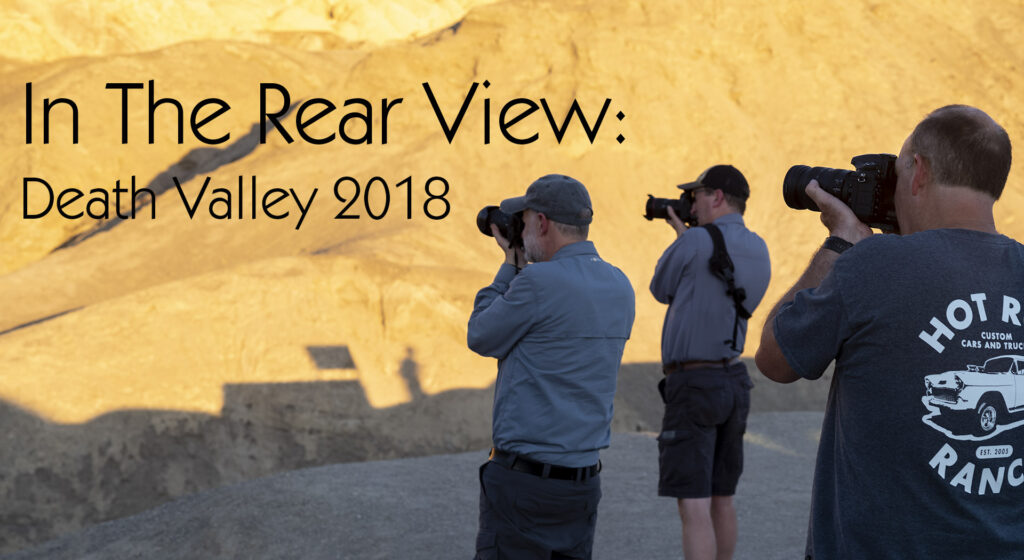
Some Like It Hot Death Valley is not known for its moderate climate. The name kind of says it all. Death Valley IS however known for its dark skies and otherworldly landscapes. Normally when I bring a workshop here, it is in springtime before the heat really starts to turn up. The high in April is usually in the low 90s (33C) with our night shooting happening at a more comfortable 70ish degrees (20c). When the temperatures are low we have perfect conditions to use the crescent moon to illuminate the foreground of our landscapes. The problem being though, if you want Milky Way shots, you have to be up around 4-5 in the morning and the moon has already set, leaving the foreground a blank void or something you have to paint in. Scorching The Milky Way This year I decided to focus the trip on the Milky Way. I still like a very small crescent moon to help illuminate the foreground, but not enough to overpower the stars that we are trying to capture. Unfortunately, that means to have the proper conditions in Death Valley for this, we would have to be there at the beginning of September. The average high this time of year is 108F (42C) with a low usually falling at around 90F (32C). Keep in mind too that the low hits just before sunrise. This year, however, Mother Nature decided that wasn’t enough. We ended up with highs hovering around 115F (46C). Our post-sunset shooting experiences were still in the neighborhood of 100F (38C). After the sun isn’t shining directly on you, these temperatures are much more manageable, but still something that can take a lot out of you. Temperatures aside, the weather decided to play along. Heading To The Hills With sandstorms working their way through Death Valley the first night, we headed out of the park to a close by ghost town with some more favorable shooting conditions. Here we got a handle on how to take an exposure at night and did a little painting with light to round out the evening. On the way back into the park we decided to stop at the entrance sign and take a group shot. With a 30 second exposure and a quick streak of a Maglite we were able to take an appropriately ghostly group shot in front of the Death Valley sign. Braving The Heat For our second evening, we headed up to the mountains where the temperatures can be up to 40 degrees cooler than on the ground. The cooler temperatures combined with a micro-climate formed by the converging mountains make this a great area to find wildlife at the park. There is a spring that has formed in the road and become an area where road runners will squat and hunt dragonflies as they swarm around the thinning water source. Between these little guys and the jackrabbits and cottontails hopping around, there were plenty of things to keep us busy until the sun had set and the heat in the valley below dropped to a nice cool 100F (38C). After we made our way back down, we headed to the Mesquite Flats sand dunes for the night. We had these amazing tubes of clouds flowing through the sky giving some depth to the Milky Way behind. A Salty Conclusion On our last night, we head down to the area in Death Valley that contains most of the salt flats. Unfortunately, the hexagonal patterns that people often want in their photos have long been trampled by this time of year. There are other areas though with unique formations of salt to play within Death Valley – one such place is Devil’s Golf Course. When the early travelers first set eyes upon these tortured grounds, the first thought was, “Only the Devil could play golf here,” naturally. After playing some golf with the devil, we headed up to Zabriskie Point to finish out the shooting experience of this years workshop. This is one of the parks quintessential landscapes. At sunset, there will be a full parking lot and a viewpoint full of tourists. After the sun sets and the moon takes command of the sky, we were the only people there until we left for the night. The badlands below always make for some great subject matter. Returning To Sanity After our last night of shooting, we meet up in the morning for an edit and critique session. Here we look at a few of everyone’s favorite shots and talk about what works with them and what can be improved. Not only are we looking at things that can be done at the time of shooting, but the way the file has been edited too. When I am in the field I am working my butt off trying to get as much information crammed into my sensor as possible. Once I’m back on the computer it is my job to massage out all of the information in the file to create the image I had intended. Once we have a chance to see how people are editing their files, a better picture of what needs to be worked on materializes. Next years workshop will be returning to the moderate heat that April offers. The milky way won’t be the focus next year, but that doesn’t make the landscape of Death Valley any less magical. For more information about next years workshop, click here.